




By Robert "Bob" Bussey
Well, by the time this is published, Halloween (one of my favorite holidays) will have sunk into the sunset. I am tired of interviewing living poets, so I thought I would let you read from a few dead ones. Dead but not forgotten. Might be rotting in their graves or already be nothing but bone, but their words live on. Hope you enjoy. These, by the way, are some of my favorite poets. And, I added just a wee bit of biographical information on each of them, just in case you don’t know anything about them.
THEME IN YELLOW
Carl Sandburg 1878 – 1967
Poet Carl Sandburg was born into a poor family in Galesburg, Illinois. In his youth, he worked many odd jobs before serving in the 6th Illinois Infantry in Puerto Rico during the Spanish-American War.
I spot the hills
With yellow balls in autumn.
I light the prairie cornfields
Orange and tawny gold clusters
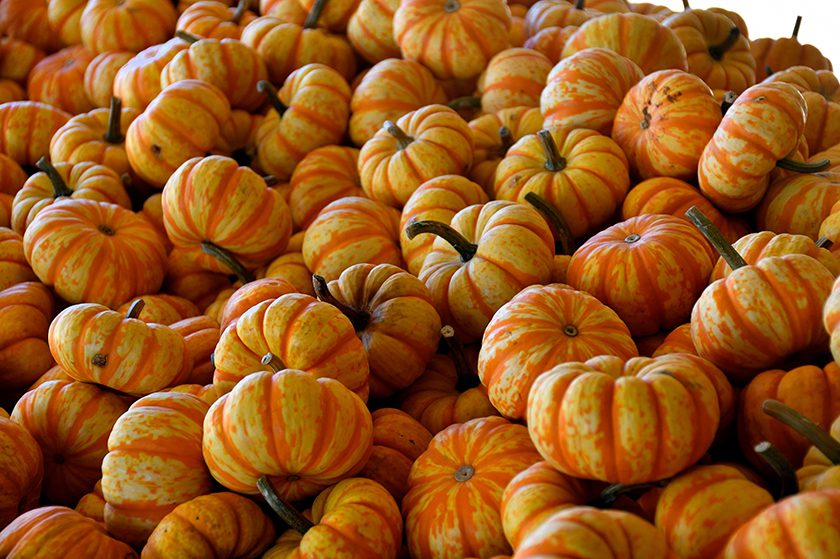
And I am called pumpkins.
On the last of October
When dusk is fallen
Children join hands
And circle round me
Singing ghost songs
And love to the harvest moon;
I am a jack-o’-lantern
With terrible teeth
And the children know
I am fooling.
THE RAVEN
Edgar Allen Poe 1809 – 1849
Edgar Allan Poe’s stature as a major figure in world literature is primarily based on his ingenious and profound short stories, poems, and critical theories, which established a highly influential rationale for the short form in both poetry and fiction. Regarded in literary histories and handbooks as the architect of the modern short story, Poe was also the principal forerunner of the “art for art’s sake” movement in 19th-century European literature.
Once upon a midnight dreary, while I pondered, weak and weary, Over many a quaint and curious volume of forgotten lore—While I nodded, nearly napping, suddenly there came a tapping, As if someone gently rapping, rapping at my chamber door— “’Tis some visitor,” I muttered, “tapping at my chamber door—
Only this and nothing more.”
Ah, distinctly I remember it was in the bleak December; And each separate dying ember wrought its ghost upon the floor. Eagerly I wished the morrow;—vainly I had sought to borrow From my books surcease of sorrow—sorrow for the lost Lenore— For the rare and radiant maiden whom the angels name Lenore—
Nameless here for evermore.
And the silken, sad, uncertain rustling of each purple curtain Thrilled me—filled me with fantastic terrors never felt before; So that now, to still the beating of my
heart, I stood repeating, “’Tis some visitor entreating entrance at my chamber door— Some late visitor entreating entrance at my chamber door;—
This it is and nothing more.”
Presently my soul grew stronger; hesitating then no longer, “Sir,” said I, “or Madam, truly your forgiveness I implore; But the fact is I was napping, and so gently you came rapping, And so faintly you came tapping, tapping at my chamber door, That I scarce was sure I heard you”—here I opened wide the
door;—
Darkness there and nothing more.
Deep into that darkness peering, long I stood there wondering, fearing, Doubting, dreaming dreams no mortal ever dared to dream before; But the silence was unbroken, and the stillness gave no token, And the only word there spoken was the whispered word, “Lenore?” This I whispered, and an echo murmured back the word, “Lenore!”—
Merely this and nothing more.
Back into the chamber turning, all my soul within me burning, Soon again I heard a tapping somewhat louder than before. “Surely,” said I, “surely that is something at my window lattice; Let me see, then, what thereat is, and this mystery explore— Let my heart be still a moment and this mystery explore;—
’Tis the wind and nothing more!”
Open here I flung the shutter, when, with many a flirt and flutter, In there stepped a stately Raven of the saintly days of yore; Not the least obeisance made he; not a minute stopped or stayed he; But, with mien of lord or lady, perched above my chamber door— Perched upon a bust of Pallas just above my chamber door—
Perched, and sat, and nothing more.
Then this ebony bird beguiling my sad fancy into smiling, By the grave and stern decorum of the countenance it wore, “Though thy crest be shorn and shaven, thou,” I said, “art sure no craven, Ghastly grim and ancient Raven wandering from
the Nightly shore—Tell me what thy lordly name is on the Night’s Plutonian shore!”
Quoth the Raven “Nevermore.”
Much I marvelled this ungainly fowl to hear discourse so plainly, Though its answer little meaning—little relevancy bore; For we cannot help agreeing that no living human being Ever yet was blest with seeing bird above his chamber door— Bird or beast upon the sculptured bust above his chamber door,
With such name as “Nevermore.”
But the Raven, sitting lonely on the placid bust, spoke only That one word, as if his soul in that one word he did outpour. Nothing further then he uttered—not a feather then he fluttered— Till I scarcely more than muttered “Other friends have flown before— On the morrow he will leave me, as my hopes have flown before.”
Then the bird said “Nevermore.”
Startled at the stillness broken by reply so aptly spoken, “Doubtless,” said I, “what it utters is its only stock and store Caught from some unhappy master whom unmerciful Disaster Followed fast and followed faster till his songs one burden bore— Till the dirges of his Hope that melancholy burden bore
Of ‘Never—nevermore.’”
But the Raven still beguiling my sad fancy into smiling, Straight I wheeled a cushioned seat in front of bird, and bust and door; Then, upon the velvet sinking, I betook myself to linking Fancy unto fancy, thinking what this ominous bird of yore— What this grim, ungainly, ghastly, gaunt and ominous bird of yore
Meant in croaking “Nevermore.”
This I sat engaged in guessing, but no syllable expressing To the fowl whose fiery eyes now burned into my bosom’s core; This and more I sat divining, with my head at ease reclining On the cushion’s velvet lining that the lamp-light gloated o’er, But whose velvet violet lining with the lamp-light gloating o’er,
She shall press, ah, nevermore!
Then, methought, the air grew denser, perfumed from an unseen censer Swung by Seraphim whose foot-falls tinkled on the tufted floor. “Wretch,” I cried, “thy God hath lent thee—by these angels he hath sent thee Respite—respite and nepenthe, from thy memories of Lenore; Quaff, oh quaff this kind nepenthe and forget this lost Lenore!”
Quoth the Raven “Nevermore.”
“Prophet!” said I, “thing of evil!—prophet still, if bird or devil!— Whether Tempter sent, or whether tempest tossed thee here ashore, Desolate yet all undaunted, on this desert land enchanted— On this home by Horror haunted—tell me truly, I implore— Is there—is there balm in Gilead?—tell me—tell me, I implore!”
Quoth the Raven “Nevermore.”
“Prophet!” said I, “thing of evil—prophet still, if bird or devil! By that Heaven that bends above us—by that God we both adore— Tell this soul with sorrow laden if, within the distant Aidenn, It shall clasp a sainted maiden whom the angels name Lenore— Clasp a rare and radiant maiden whom the angels name Lenore.”
Quoth the Raven “Nevermore.”
“Be that word our sign in parting, bird or fiend!” I shrieked, upstarting— “Get thee back into the tempest and the Night’s Plutonian shore! Leave no black plume as a token of that lie thy soul hath spoken! Leave my loneliness unbroken!—quit the bust above my door! Take thy beak from out my heart, and take thy form from off my door!”
Quoth the Raven “Nevermore.”
And the Raven, never flitting, still is sitting, still is sitting On the pallid bust of Pallas just above my chamber door; And his eyes have all the seeming of a demon’s that is dreaming, And the lamp-light o’er him streaming throws his shadow on the floor; And my soul from out that shadow that lies floating on the floor
Shall be lifted—nevermore!
HALLOWEEN
Robert Burns 1759 –1796
Born in Alloway, Scotland, on January 25, 1759, Robert Burns was the author of Poems, Chiefly in the Scottish Dialect (1786) and Tam O’ Shanter (1795).
Upon that night, when fairies light On Cassilis Downans dance,
Or owre the lays, in splendid blaze, On sprightly coursers prance;
Or for Colean the route is ta’en,
Beneath the moon’s pale beams; There, up the cove, to stray and rove, Among the rocks and streams
To sport that night.
Among the bonny winding banks, Where Doon rins, wimplin’ clear, Where Bruce ance ruled the martial ranks, And shook his Carrick spear,
Some merry, friendly, country-folks, Together did convene,
To burn their nits, and pou their stocks, And haud their Halloween
Fu’ blithe that night.
The lasses feat, and cleanly neat, Mair braw than when they’re fine; Their faces blithe, fu’ sweetly kythe, Hearts leal, and warm, and kin’; The lads sae trig, wi’ wooer-babs, Weel knotted on their garten,
Some unco blate, and some wi’ gabs, Gar lasses’ hearts gang startin’
Whiles fast at night.
Then, first and foremost, through the kail, Their stocks maun a’ be sought ance; They steek their een, and graip and wale, For muckle anes and straught anes. Poor hav’rel Will fell aff the drift, And wander’d through the bow-kail,
And pou’t, for want o’ better shift, A runt was like a sow-tail,
Sae bow’t that night.
Then, staught or crooked, yird or nane, They roar and cry a’ throu’ther; The very wee things, todlin’, rin, Wi’ stocks out owre their shouther; And gif the custoc’s sweet or sour. Wi’ joctelegs they taste them; Syne cozily, aboon the door,
Wi cannie care, they’ve placed them To lie that night.
The lasses staw frae ‘mang them a’ To pou their stalks of corn:
But Rab slips out, and jinks about, Behint the muckle thorn:
He grippet Nelly hard and fast; Loud skirl’d a’ the lasses;
But her tap-pickle maist was lost, When kitlin’ in the fause-house Wi’ him that night.
The auld guidwife’s well-hoordit nits, Are round and round divided, And monie lads’ and lasses’ fates Are there that night decided:
Some kindle coothie, side by side, And burn thegither trimly;
Some start awa, wi’ saucy pride, And jump out-owre the chimlie Fu’ high that night.
Jean slips in twa wi’ tentie ee; Wha ’twas she wadna tell;
But this is Jock, and this is me,
She says in to hersel:
He bleezed owre her, and she owre him, As they wad never mair part;
Till, fuff! he started up the lum, And Jean had e’en a sair heart
To see’t that night.
Poor Willie, wi’ his bow-kail runt, Was brunt wi’ primsie Mallie;
And Mallie, nae doubt, took the drunt, To be compared to Willie;
Mall’s nit lap out wi’ pridefu’ fling, And her ain fit it brunt it;
While Willie lap, and swore by jing, ‘Twas just the way he wanted
To be that night.
Nell had the fause-house in her min’, She pits hersel and Rob in;
In loving bleeze they sweetly join, Till white in ase they’re sobbin’; Nell’s heart was dancin’ at the view, She whisper’d Rob to leuk for’t: Rob, stowlins, prie’d her bonny mou’, Fu’ cozie in the neuk for’t,
Unseen that night.
But Merran sat behint their backs, Her thoughts on Andrew Bell;
She lea’es them gashin’ at their cracks, And slips out by hersel:
She through the yard the nearest taks, And to the kiln goes then,
And darklins graipit for the bauks, And in the blue-clue throws then, Right fear’t that night.
And aye she win’t, and aye she swat, I wat she made nae jaukin’,
Till something held within the pat, Guid Lord! but she was quakin’! But whether ‘was the deil himsel, Or whether ’twas a bauk-en’, Or whether it was Andrew Bell, She didna wait on talkin’
To spier that night.
Wee Jennie to her grannie says, “Will ye go wi’ me, grannie? I’ll eat the apple at the glass I gat frae Uncle Johnnie:”
She fuff’t her pipe wi’ sic a lunt, In wrath she was sae vap’rin’, She notice’t na, an aizle brunt Her braw new worset apron Out through that night.
“Ye little skelpie-limmer’s face! I daur you try sic sportin’,
As seek the foul thief ony place, For him to spae your fortune. Nae doubt but ye may get a sight! Great cause ye hae to fear it; For mony a ane has gotten a fright, And lived and died deleeret On sic a night.
“Ae hairst afore the Sherramoor, — I mind’t as weel’s yestreen,
I was a gilpey then, I’m sure I wasna past fifteen;
The simmer had been cauld and wat, And stuff was unco green;
And aye a rantin’ kirn we gat,
And just on Halloween
It fell that night.
“Our stibble-rig was Rab M’Graen, A clever sturdy fallow:
His son gat Eppie Sim wi’ wean, That lived in Achmacalla:
He gat hemp-seed, I mind it weel, And he made unco light o’t;
But mony a day was by himsel, He was sae sairly frighted
That very night.”
Then up gat fechtin’ Jamie Fleck, And he swore by his conscience, That he could saw hemp-seed a peck; For it was a’ but nonsense.
The auld guidman raught down the pock, And out a hanfu’ gied him;
Syne bade him slip frae ‘mang the folk, Some time when nae ane see’d him, And try’t that night.
He marches through amang the stacks, Though he was something sturtin; The graip he for a harrow taks.
And haurls it at his curpin;
And every now and then he says, “Hemp-seed, I saw thee,
And her that is to be my lass,
Come after me, and draw thee
As fast this night.”
He whistled up Lord Lennox’ march To keep his courage cheery;
Although his hair began to arch,
He was say fley’d and eerie:
Till presently he hears a squeak, And then a grane and gruntle; He by his shouther gae a keek, And tumbled wi’ a wintle
Out-owre that night.
He roar’d a horrid murder-shout, In dreadfu’ desperation!
And young and auld came runnin’ out To hear the sad narration;
He swore ’twas hilchin Jean M’Craw, Or crouchie Merran Humphie, Till, stop! she trotted through them And wha was it but grumphie Asteer that night!
Meg fain wad to the barn hae gaen, To win three wechts o’ naething; But for to meet the deil her lane, She pat but little faith in:
She gies the herd a pickle nits, And two red-cheekit apples,
To watch, while for the barn she sets, In hopes to see Tam Kipples That very nicht.
She turns the key wi cannie thraw, And owre the threshold ventures; But first on Sawnie gies a ca’ Syne bauldly in she enters:
A ratton rattled up the wa’,
And she cried, Lord, preserve her! And ran through midden-hole and a’, And pray’d wi’ zeal and fervour, Fu’ fast that night;
They hoy’t out Will wi’ sair advice; They hecht him some fine braw ane; It chanced the stack he faddom’d thrice Was timmer-propt for thrawin’; He taks a swirlie, auld moss-oak, For some black grousome carlin; And loot a winze, and drew a stroke, Till skin in blypes cam haurlin’ Aff’s nieves that night.
A wanton widow Leezie was,
As canty as a kittlin;
But, och! that night amang the shaws, She got a fearfu’ settlin’!
She through the whins, and by the cairn, And owre the hill gaed scrievin, Whare three lairds’ lands met at a burn To dip her left sark-sleeve in,
Was bent that night.
Whyles owre a linn the burnie plays, As through the glen it wimpl’t; Whyles round a rocky scaur it strays; Whyles in a wiel it dimpl’t;
Whyles glitter’d to the nightly rays, Wi’ bickering, dancing dazzle; Whyles cookit underneath the braes, Below the spreading hazel,
Unseen that night.
Among the brackens, on the brae, Between her and the moon,
The deil, or else an outler quey, Gat up and gae a croon:
Poor Leezie’s heart maist lap the hool! Near lav’rock-height she jumpit;
but mist a fit, and in the pool
Out-owre the lugs she plumpit,
Wi’ a plunge that night.
In order, on the clean hearth-stane,
The luggies three are ranged,
And every time great care is ta’en’,
To see them duly changed:
Auld Uncle John, wha wedlock joys
Sin’ Mar’s year did desire,
Because he gat the toom dish thrice,
He heaved them on the fire
In wrath that night.
Wi’ merry sangs, and friendly cracks,
I wat they didna weary;
And unco tales, and funny jokes,
Their sports were cheap and cheery;
Till butter’d so’ns, wi’ fragrant lunt,
Set a’ their gabs a-steerin’;
Syne, wi’ a social glass o’ strunt,
They parted aff careerin’
Fu’ blythe that night.
Try reading that one out loud. Dare ya.
Halloween Night 1
By: Bob Bussey
Bob Bussey rides bikes, not brooms. He sometimes writes poems just for fun. Just
like this one.
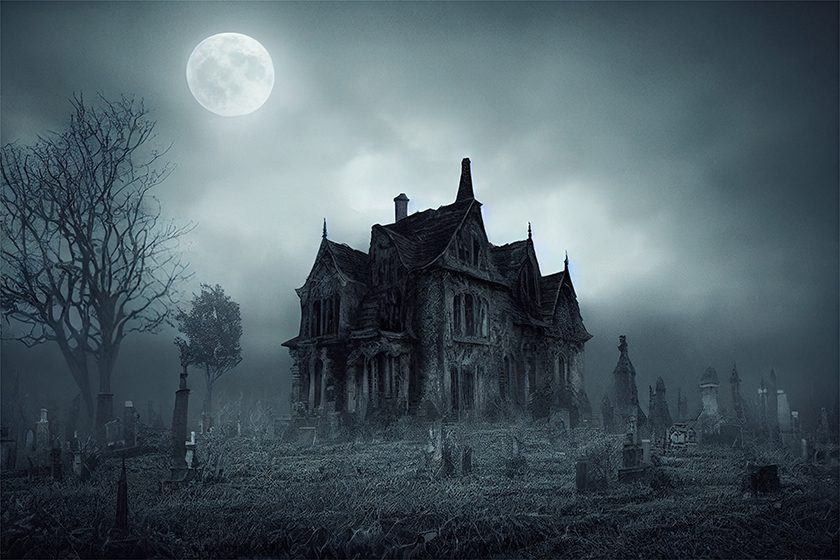
On Halloween night, when ghastly shadows creep,
The ghouls and ghosts awake from dead sleep.
Creepy monsters silently stalk the streets,
While the walking dead rise from their yellowed sheets.
The witches gather, their magic brew to stir,
A bubbling cauldron begins to whir.
They mount each broom and take to silent flight,
With warts and wicked grins in the night.
Frankenstein lumbers,
The Mummy unwinds,
While bats wheel overhead and rats scurry behind.
Among rotting tombstones, the dead start to moan and roam,
And no one dares venture too far from home.
Edgar Allan Poe would shiver with fright,
Boris Karloff would relish the sight.
Mark Twain might laugh at the terrible scene,
Where nightmares come alive on Halloween!
So bolt every window and tightly lock every door,
For the dead are returning to settle the score.
When midnight strikes and the church bells ring,
Beware what the shadows of Halloween bring!
Halloween Night II
By: Bob Bussey (not dead yet)
Bob Bussey lives in central Louisiana. He is married with 3 kids and 5 grandkids. None of them are afraid of him.
The moon peeks out from behind a ghostly cloud,
The wind begins to urgently moan.
The shadows gather, dark and proud,
And no one dares walk alone.
A ghost drifts past the rusty garden gate,
A black cat guards the stair.
The wicked witch is stirring something late—
But what is in her lair?
So lock your measly doors and dim your lights,
Let morbid laughter fill the gloom.
For Halloween belongs to night,
And night has tricks to bloom!

Robert (Bicycle Bob) Bussey is a local attorney, poet and children’s book writer who has resided in CENLA since 1986. Most times he interviews other poets and writes these articles. But sometimes he likes to read poems from dead poets. Especially around Halloween. If you are a living poet and would like to be interviewed about your poetry, you can reach him at Rlbussey450@icloud.com. If you are a dead poet, don’t reach out.