





By Jeanni Ritchie
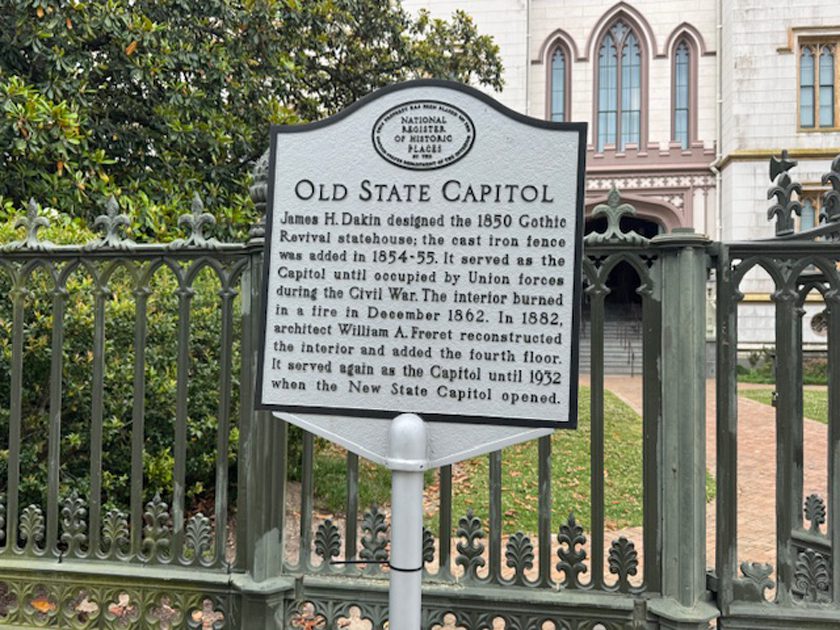
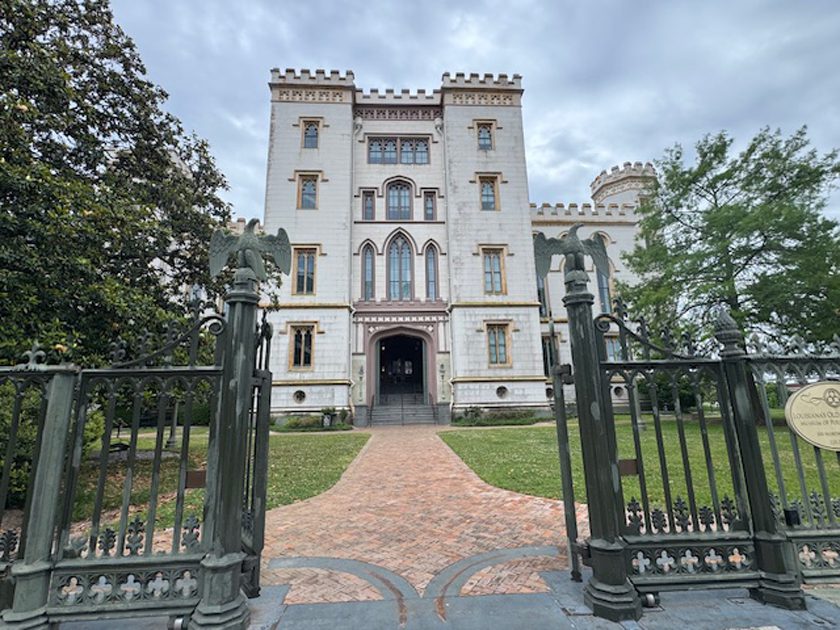
Perched above the Mississippi River in Baton Rouge, Louisiana’s Old State Capitol doesn’t look like a government building at all. With its turrets and stained-glass dome, it feels more like stepping into a castle than a typical capitol building—and that’s exactly why it’s one of the most unique historic sites in the state.
Originally built in the 1800s and now operating as a political history museum, the Old State Capitol blends architecture, storytelling, and hands-on exhibits in a way that makes history come alive.
Inside, a cast-iron spiral staircase leads visitors upward beneath a stunning stained-glass dome, while exhibits walk you through Louisiana’s political past—from Reconstruction to the legacy of Huey P. Long.
The museum does an especially good job of making history accessible. Interactive displays, rotating exhibits, and immersive storytelling help connect past decisions to present-day life in Louisiana. It’s the kind of place where you can spend an hour—or an entire day—depending on how deep you want to go.
But right now, there’s an added reason to visit.
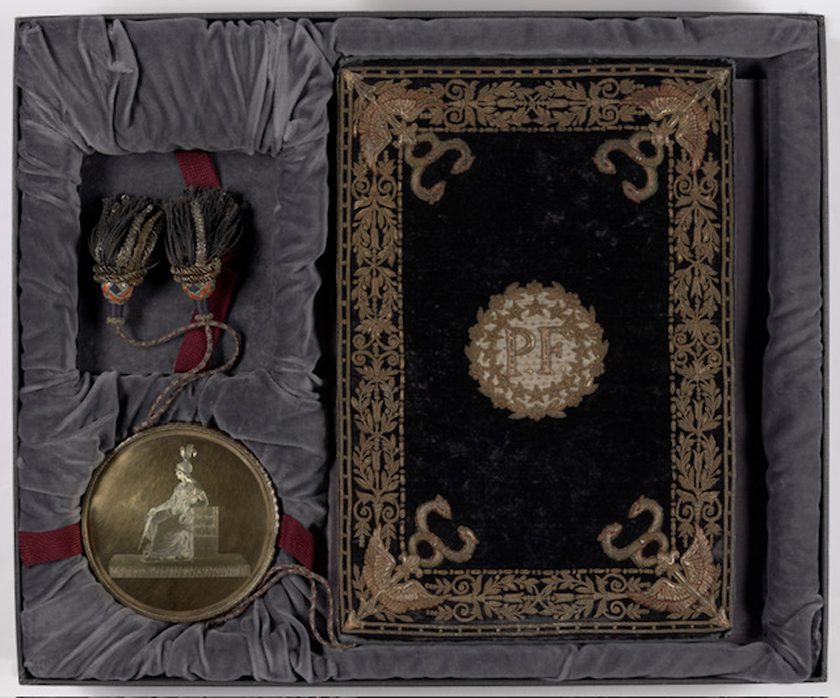
Through July 11, the Old State Capitol is hosting a special America 250 exhibit, marking the upcoming 250th anniversary of the United States. On loan from the National Archives, the exhibit centers on one of the most pivotal moments in American history: the Louisiana Purchase.
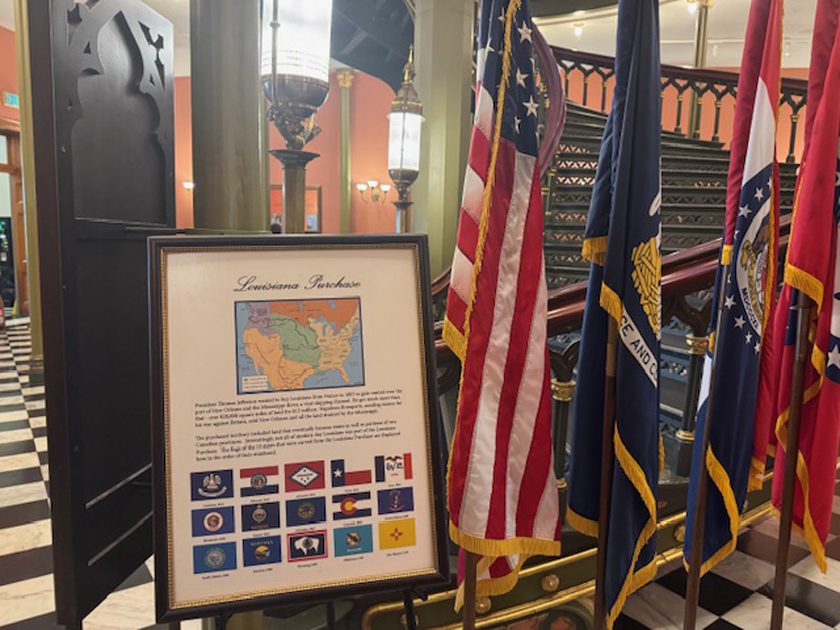
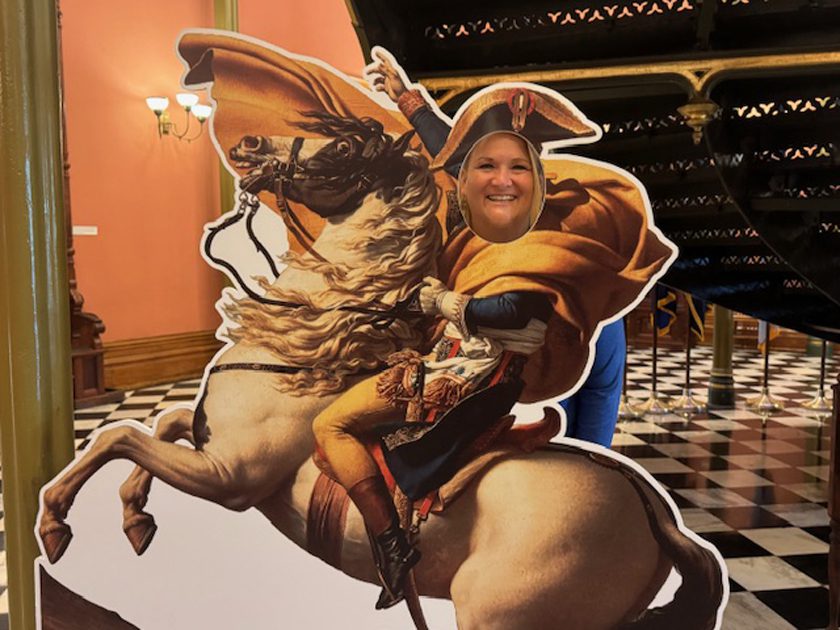
Titled Bought for a Song: A Young Nation Expands, the exhibit highlights the 1803 agreement that doubled the size of the United States practically overnight. Signed under the authority of Napoleon Bonaparte, the Louisiana Purchase transferred more than 800,000 square miles of land to the young nation for just $15 million—forever changing the country’s trajectory.
More than two centuries later, that document has returned to the very state it helped define. Interestingly, the Louisiana Purchase involved far more than the present state of Louisiana.
The 1803 Louisiana Purchase included land that makes up all or part of 15 present-day U.S. states, stretching from the Mississippi River to the Rocky Mountains. It includes the entireties of Arkansas, Missouri, Iowa, Oklahoma, Kansas, and Nebraska, plus large parts of North Dakota, South Dakota, Montana, Wyoming, Colorado, Minnesota, Louisiana, New Mexico, and Texas.
While photos were not allowed in the actual exhibit due to preservation of the artifacts, Mary Durusau, Executive Director of the Louisiana Old State Capitol, offered to send a hi-res copy of the documents.
The link to the French Exchange Copy of the Convention Between the United States of America and the Republic of France for the Payment of 60 Million Francs for the Purchase of Louisiana can be accessed here: catalog.archives.
The Treaty between the United States of America and the French Republic ceding the province of Louisiana to the United States can be viewed here: catalog.archives.
A handout with several quotes was available in the exhibit, including the one that sparked the title of the exhibit:
“Let the land rejoice, for you have bought Louisiana for a song.”
The line comes from a July 18, 1803 letter written by General Horatio Gates to President Thomas Jefferson, praising the acquisition as an extraordinary bargain and recognizing its significance in shaping the young nation’s future.
The exhibit explores not just the transaction itself, but its lasting impact—on expansion, identity, and the cultural fabric of Louisiana. French influence still weaves through the state today, from language and food to law and tradition, making this moment in history feel surprisingly present.
Another upcoming America 250-related exhibit, Reimagining America: The Maps of Lewis and Clark, will be on display from June 23 through November 27. A companion exhibit, Excursions, Expeditions and Discoveries: A Young Nation Expands, will focus on Louisiana and exploration here, alongside present-day photos of some of these sites.
A current exhibit, Japanese War Brides: Across a Wide Divide, offers a broader look at how global events and personal stories intersect to shape communities across the country. It will remain on display until June 6, 2026.
Whether you’re drawn in by the architecture, the history, or the rare opportunity to see nationally significant documents up close, the Old State Capitol offers a layered experience that’s both local and far-reaching.
And for a limited time, it’s also a chance to stand in the place where one of America’s most important stories has quite literally come home.