





By Ron Cook
Last month we floated through the clouds in a glider considering how the reading of air currents and clouds and mountain air-lifts can be compared to relationships in life’s up and down journey. This month let’s consider how a main river, like the Cane River, that runs through Louisiana, can be compared to the floating through life experiences of different sorts and degrees of loving.
What kind of shifts and turns does the great Cane River make along its 30 mile course? How many lakes and streams meander from this epic River? How many people have created a camp along the Cane? How can a river be compared to the different forms and degrees of love and loving?
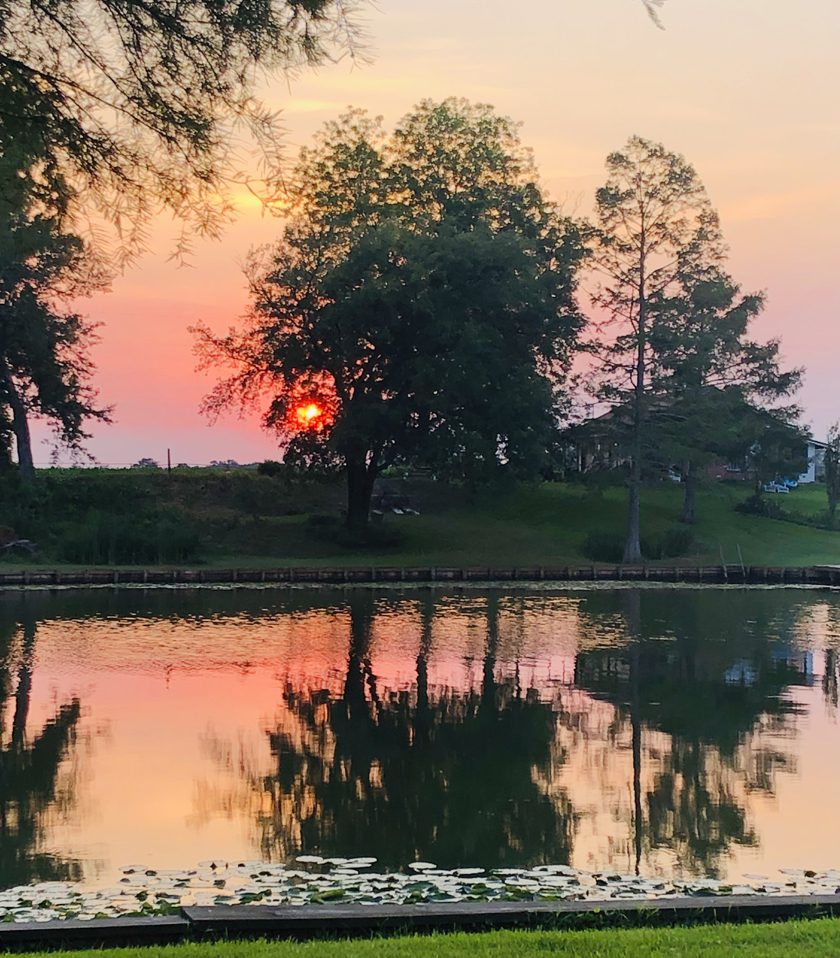
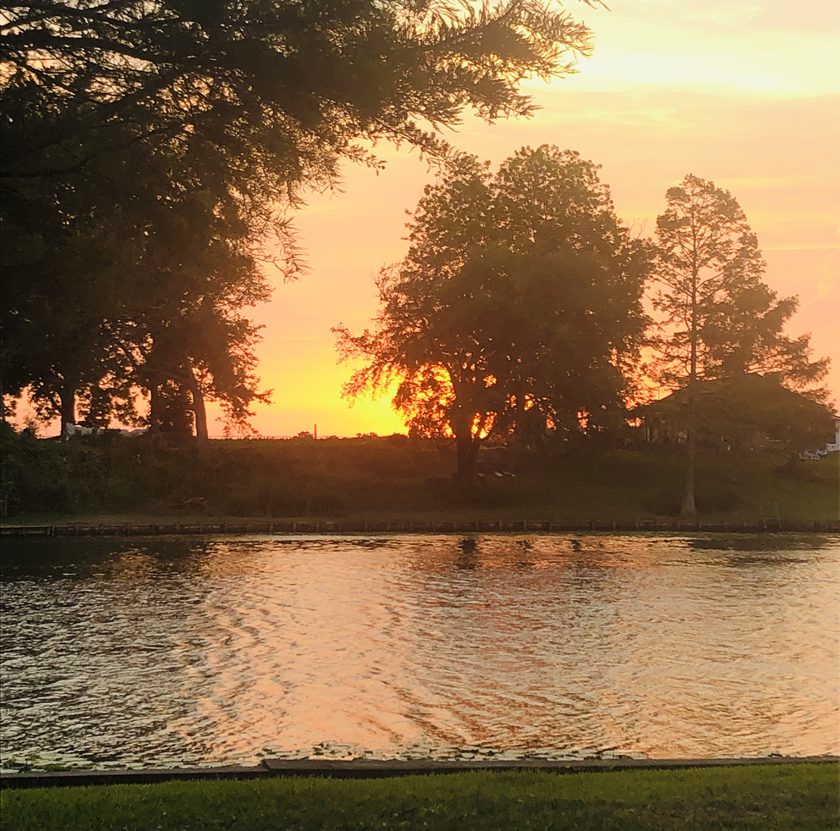
Sitting in an outside patio kitchen along the Cane near Natchez, Louisiana several years ago, I had the great pleasure of experiencing the undulating moods of the Cane; musing about how it relates to love, and the many various kinds of love we experience in this life.
Join me on this journey, and keep your oars in the water…
The Cane River was once a part of the mighty Red River until the Red River changed course, but left behind 30 miles of what it is now known as the Cane River, making its way through Cajun-Creole country, the Natchitoches Parish. The river is mighty in some places, and lake-like in others. Camps are sprinkled along either side of the river Cane providing a getaway haven along the relaxing gentle flow of these waters. Some folks have built homes, and others have set up mobile homes where they enjoy the view and the company of other Cajuns and Creoles.
These lovely Louisiana residents are a pleasant mix of the history of Louisiana combining French, Spanish, African, Jamaican, and Native American, as well as immigrant peoples from other countries and other parts of the United States. The love of the river is a great draw; the love of culture; the love of the people; the love of good local cooking and barbecuing, and having a soda pop with friends, rounds out many reasons why people are drawn to the river.
The River of “Love” also runs through the heart of Louisiana. People recognize the importance of greeting and smiling, recognizing and enjoying their neighbors, people in stores and people in the streets. Especially along the Cane, people are intentionally there, in their truth, to enjoy the peace and quiet steady rolling of the river; the sense of relaxation that permeates the shores of the great wonderful Cane. The sense of genuine hospitality seems to reign along the Cane River camps, which in other States might be considered cottages, summer homes or get away residences; but in Louisiana they’re called Camps.
One of the things I love about the culture in Louisiana is that people in general offer the best for each other and look for the best in each other. There isn’t this sense of defensive attitude about another person’s goodness. I wonder sometimes, as a therapist and an author, where that comes from. I believe, after living in Louisiana and steeping myself in the culture, it comes from more of a sense of self-confidence, because one has experienced it; they’ve experienced the joy of being loved by others. When we live in a culture of doubt and fear or suspicion, we are less likely to offer kindness and love to others; we seem to need to retain it all for ourselves.
There are many theories of social and moral development among people that are interesting to consider. And then there are also many interesting forms of love to consider: the kinds of love, the expressions of love, and the deepening of love. Basically what is love? That’s a four letter word that is used rather loosely to describe many things from food to personal affection.
The development of a moral ethical sense about life seems to have progressive stages of inclusion in our worldview of ourselves, others and the planet. It seems clear that the first moral and ethical relationship we are called to develop is our proper and appropriate care for yourself. And then this development seems to slowly proceed to proper and appropriate caring for our immediate parents and family siblings. From there to our community and on to our city, our state, our country and then to all countries and lastly to all sentient living creatures and non-living forms of the earth’s structure. We seem to progress based on the success of the initial adjustment in the first 5 years of our lives with our own sense of ourselves and so on until the person develops a care and affection for the entire world and all the peoples and countries that are in it including the plants and animals and all forms of living and nonliving matter on our planet. Then, of course, our affection could extend to the universe and beyond, as Star Trekkies might agree. Step by step, we take this short period of time that we have on this Earth to move from one unknown mysterious previous existence before our birth, to another unknown mystery after existence that is to come for each of us in whatever we believe to be and what actually is the afterlife.
“And what of love,” asks the poet and the lovers?
The two greatest commandments still are: love God/Creator/Higher Power/BigBanger/or whatever you believe, with your whole heart, your whole mind and your whole soul, and then love others as yourself.
That’s the whole ball game simply stated, yet this statement satisfies all the requirements of love that would make this a perfect world if it were adequately achieved by all mankind.
The Greeks recognized and named eight kinds of love which are interesting to look at in their essence and the core of their understanding.
There is first the love of Storge, which is familial or love of family.
Somewhere in there in the beginning is a degree of Philautia love or self-love.
Then there is Philia love, which is the love that’s known as friendship.
And then there is Ludus love which is the enjoyment of playful loving.
At some early time we develop Eros loving which is the romantic version.
Hopefully we come to the Pragma form of love which is the enduring type.
At the height of love we find Agape loving which is the unconditional love of God also known as Ahava love in the Hebrew.
So what does this have to do with the Cane River we might ask?
I would like to propose that the Cane River is an exquisite example of love as the good Lord proposed it to be. It carries life with it, it gives what love it has to every twist and turn and lovely shore it kisses. Louisiana is a largely water covered state and the Cane River was the original trading waterway in the early history of this marvelous state. And of course we have the Mississippi running right on down to New Orleans now bringing another waterway through the center of the country and depositing its richness into the Gulf of Mexico.
Love has a source, as this mighty River had its source in the Red River separating from that River in about 1836 and forming its own way still flowing strong today.
The Cane river is a good example of long-lasting love closing in on 200 years of its own existence. It has created family love, the familial style, that lives along its shores and enjoys long weekends and vacations sitting and watching the beauty of the river as it flows past. Several years ago I sat outside a camp on the back kitchen-like covered deck during clear days and some Misty and other rainy days writing poetry that just flowed from the river and the life around it. I wrote a piece you may remember from back then just called, “The River Cane,” in which I included two poems that rose out of those days on that porch.
Eros love is meant to be the love that has developed over time from attraction to infatuation and then to little intimacies that lead to commitment and full erotic expression. I have finally found the full expression of Eros in its early stages of Attraction and Infatuation. The river drew many emotions and joys from my observations. My new Love for Life and a special targeted individual, has brought a daily moment by moment new joy that I have never known in my seven plus decades. This daily moment by moment experience of love which is loving someone and being loved in return is the highest form of love we can experience as a human unless we are in the celibate charism love of the Divine which is enhanced and invoked in all of the areas of loving when they are properly exercised and experienced. Selfishness and unkindness have no place in the realm of love and must be forsaken to achieve the full expression of love and whatever way you find it, I believe.
I have come to know that we are not promised happiness in this veil of tears; this valley sometimes of trials. We are only promised the ‘pursuit’ of happiness and encouraged to follow that pursuit where we are being led with Grace and right intention. Pursuing the happiness of the world is empty, fleeting and non-sustainable. The happiness of money, beauty, fame, and power all leave us empty in the end and as my brother the Priest reminds me, having celebrated many funerals in Louisiana, he has never seen a U-Haul truck attached to the hearse. Something to be considered.
But, joy goes with us everywhere. The joy of all the forms of love when taken into consideration as to how the Creator intended them to be used and enjoyed, give constant companionship and true lasting rewards that we do take with us in the form of those we have loved and have given life to here by our love, and then join in the great cloud of witnesses.
And finally, the highest form of love is that of Agape and Ahava, the love of God that is unconditional, that cannot be increased or decreased an iota, that is permanent, that is without comparison with any desired fulfillment in this life. In my mind, joy is the expression and the attainment of Agape and Ahava love.
Remembering, as we have been promised, that all things work out for the good for those who keep the commandments, love God and are called to, and living out, the purpose they were created to serve.
The River Cane is simply and beautifully, living out the purpose to which it has been called, serving many loving all, not favoring any.
I rest my case, you honorable, beautiful people of Louisiana.