




By Robert "Bob" Bussey
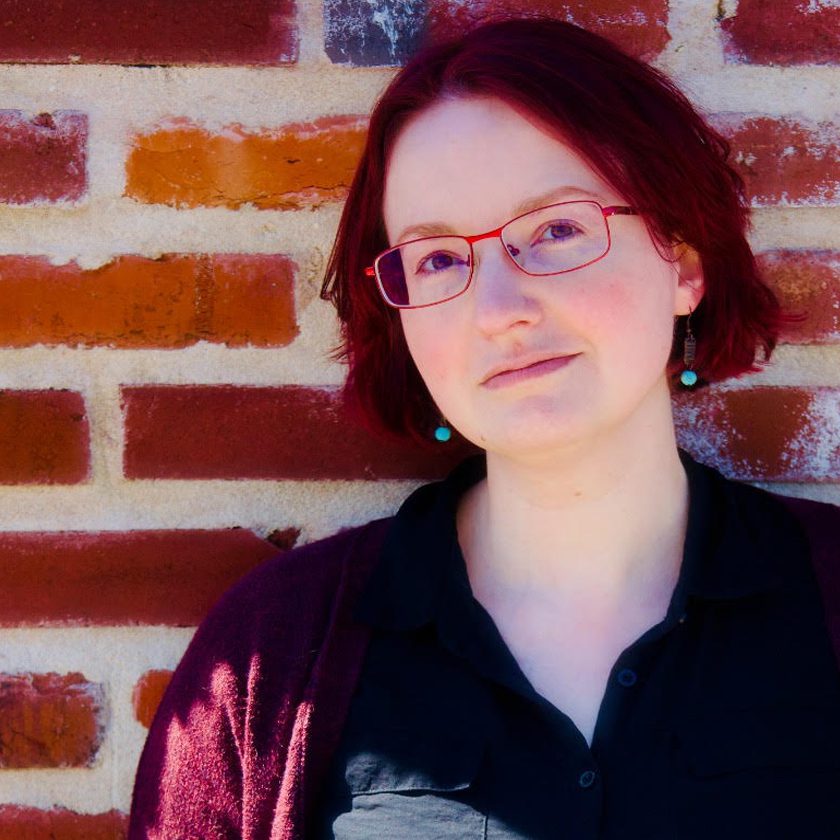
I normally tell the reader something about the poet first and then take a look at their poetry. Let’s shake things up a bit and just read some of her poetry first. I think Professor Macijeski would approve, as you will see later.
What If When We Introduced Ourselves, We Told These Stories Instead
I thought I knew God once as a girl in New Hampshire climbing a mountain so big and glorious and flooded with sunlight I nearly gave way only half-through the forests and rocks and streams, but something lifted me I still can’t name. I’ll never be sure.
Every time it rains a real rain in any of the small towns I find myself living in, which is to say towns where I begin falling asleep absently over time and building routines around dish drains and the cat’s polite shits piling in his box underneath plastic bags filled with other plastic grocery bags, I look at how the water leaps out the gutters like it’s escaping the house and I remember it rained the day I saw the Colosseum in Rome. I remember it was loud. Like I was under a jar. And the gargoyles were shouting back what the sky kept yelling.
Twice I’ve traveled the entire east-west of Iowa by train. Fresh-eyed boys playing guitar in the lounge car, cornfield skies swallowing light down the windows. Amish families filling seats with some hidden steadiness I envied. The hauntings they carried were ancestors. Mine were worries wringing their invisible hands. In one memory, rickety in my footing between rail cars, my husband and I want hot food so much we pay seven dollars each for plastic bowls of reheated macaroni and cheese.
One time I stole toilet paper from the 19th floor of a Japanese office building. About a dozen others went with me. We needed it. We had lost our jobs there. We needed the gesture, too—that tiny, useless revenge we could bring with us to our bathrooms and meter out privately in little ribbons of loss.
Because Imagination is All About Reclaiming What We Know so We Can Better Build What We Love
My brain is a calm woman in a long life
who waits for guests to come eat the soup
she’s nursed for hours. She’ll give them steam
in bright orange bowls.
My brain comes from generations of quiet.
For better or worse. Our work was quiet.
The little moments we made in our lives
with our hands to get the hard stuff done
was quiet. This is my inheritance.
My brain likes to look at old pictures of itself
before it was formed. When it was a seed,
an unwritten note, a handful of mud
craving electricity.
My brain is a galaxy
clustering the black hole
of my first thought. An unearthly spinning.
My brain spends a part of each day inventing
histories. Whole libraries are crowded with
these inventions. In one of them money doesn’t exist
and kindness is our moral currency. Everyone
is wonderful at listening.
When I push myself, when I look down
the long tunnel of my remembering,
I see my brain as a murmuring crowd.
Indistinct noises and fabric shifting
under the moon my stare makes.
This keeps happening.
My brain loves what Emily Dickinson says about us.
That we are wider than the sky and sea, that part
about our minds reaching into the natural world
to gather what we know, to gather simple evidence
of what we love—an apple, a dropped feather,
a leaf, a bit of snow—and turn these things back over
and over in our hands until they’re polished,
until they’re memories. Until their disappearance
buries them forever in the warm loam of our thinking.
Evening Market
Death is a woman this time
and dying has never been more meticulous
in her hands. She walks through the market,
her heels a steady rhythm
on the pavement, a shadow among the colors,
collecting things. The ripe tomatoes
heavy with juice. The aroma of peaches
singing into the air. The beeping of the meat trucks
backing up to unload their sides of lamb,
pigeons scattering for seeds between the stalls.
She sees the big metallic fish lined up on ice
gashed at the neck,
their gills flared open
like petticoats.
She sees the impeccable teeth
in the mouths of the fish.
Walking home, she watches the clouds
yellow out between the church spires,
the last of the sunlight
rounding along the vegetables.
Before long she’ll be frying a trout whole
in a thin pool of butter, lemon juice sputtering
in the pan, setting the fish atop a bed of rice,
setting the table, steadying herself into a chair,
guiding her skirt as she sits,
using a knife and fork and her slight fingers
to remove and pile the tiny bones.
How to Read
The alphabet is a lost cipher, crude loops and scratches struggling to sequence. Each cluster is a garden. Each cluster of clusters a clumsy narrative. Metamorphosis. You have to break down to be reborn. Understanding first requires wailing wordlessly into the void you come from. I’m not sure I believe caves and what they hold onto. They speak of a human past we can’t reach. Convenient. Science knows the generations who built us, but only as bits of evidence dangling from the stories they haunt. So I was a girl. So I dragged old bedsheets from the house then old branches from the yard and made camp. It was a poor structure but it was mine. The books came next. I barely had to bid them. Like birds, they already knew the way home. I held them in my hands through afternoons. Unsteady and alive. Fluttering. A migration. So I was a girl alone. So what. I was part of the flock. I had my own sky, my own speaking. In my mind was flower after flower. That was the story of me.
After
For Sophie Scholl, with a line by Philip Memmer
Sophie Scholl (1921-1943), a German student and anti-Nazi activist, was executed by guillotine after she was witnessed dropping leaflets from the top floor inside a main building at Ludwig Maximillian University.
What about the body, this old suitcase,
touch magnet, lazy bones, soft bleeder,
bruised apple, tired old war horse?
What if we were as simple as paper dolls inside
folding and folding, little tabs clinging to what we know?
Soft, smooth, purposed. We could become cranes.
We could become term papers, leaflets, wedding invitations,
lanterns, white roses, a tickertape parade, streaming
far away from the bodies
we used to nest inside.
Each generation shedding another autumn
to the forest floor.
Think of us this way.
Think of us as
pages and pages
coming home.
Now the question-and-answer part:
What do you want in the article?
I would like for readers to be able to get a sense of the person behind the poems (the weird, flawed, privileged, struggling human trying to express what it is to be in the world in this unique but also inevitable moment in time). I would like for readers to feel somehow encouraged to reacquaint themselves with their own curiosity and creativity.
How would you describe your writing style? Free verse; rap, epic, sonnets, something else.
I don’t know that there’s ONE style I can say is my own. I like to continually reinvent and look at what my writing can be in new ways, but there’s an exception to everything. I don’t often write in set forms, for example, but I recently felt compelled to write a full double crown of sonnets. Weird. I’m driven more by curiosity than by style. When I’m curious about listening for the logic in speech patterns, my poems become more prose-like and sentence-driven. When I’m curious about how our minds interpret and construct images, my lines might get shorter and/or more abstract. I try to keep my process organic this way.
Did your poetry evolve? How? When did that happen?
I did not always want to write poems. When I was younger I thought I would write stories. Then I read Galway Kinnell’s Book of Nightmares in eleventh grade. His life and is world were very different from mine, but there’s a single line that worked in my brain like no other written phrase had hit me before. He was writing about a violinist and the phrase was something like “the bow listened down its length.” Yes! I thought. That’s exactly right. I knew this as a violinist myself. That exactly described what this music-making felt like to me. Then I started writing poems somewhat seriously after a statewide arts camp that summer. I got to take a class that brought poets and jazz musicians together. It was some of the wildest creating. I had ever done. It crowbarred me right out of my comfort zone and led to me ultimately earning three degrees in writing. Each program exposed me to different writers, different mentors, and different peers.
Do you like cheese? If so, which is your favorite?
Of course. My favorite cheese is Cabot’s Hunter’s Choice Seriously Sharp Cheddar. For a while in my 20s when I still lived in Vermont I worked as a temp in the offices of a Cabot cheese distribution center. Sometimes I’d get free bricks of the stuff to take home. I only went in the warehouse once or twice. It looked like the end of Raiders of the Last Ark but with horizonless shelves of cheese.
Do any of your poems deal with the fulfillment of a wish?
For me, all poems are a kind of wish, but not always in a literal sense. Sometimes I write about a memory or an experience I wish I could return to. Sometimes I write about a difficult event or feeling so that I can wish it into something different, or wish it further out of my own psyche. Sometimes I try to invent something new, and in that act I’m wishing for a mor joyful or peaceful or understanding world. I think, for me, a poem is always a wish for greater understanding—either better understanding of myself or of the world—and also a wish that whoever reads it might find some kind of discovery and/or catharsis.
Are most of your poems about your personal experiences?
Even when my poems aren’t depicting precise or actual details of things that have happened to me, they’re still always coming from my experience. There’s no escaping that. Even the most surreal poems come from some core truth I carry. If it’s not a lived memory, it’s a felt memory.
In a poem I might imagine something absurd like becoming a pineapple. Of course that hasn’t happened, but I have experienced becoming strange to myself. Sometimes I might invent a persona or character to visit in my poems. That feels kind of like cheating, but in a fun way. I can hide intensely personal experiences inside what I imagine for that persona. In effect that creates this middle distance or tension between the self I’m writing and the self I’m living; the self in the poem both is me and is not me.
Do you insert yourself into any of your poems?
Oh, absolutely. Like in my answer to the earlier question, sometimes my most personal or intimate poems come through a persona. For example, I have a whole series of poems following the character of a yeti. What better way to relate the experience of not fitting in than by exploring that through the perspective of a quasi-human being?
Did your childhood experiences influence any of your poems? If so, how?
Like most, my childhood was complicated. There were hard things, and there were things I’ll always be grateful for. My childhood is a major influence on my writing. I grew up in a small town with a big backyard. I’d spend hours poking at grasshoppers, watching the clouds circle the neighborhood, attempting to climb trees, making snowpeople, etc. Having all that open space helped me feel wild, and I built a far-reaching imagination fueled by all that sky and all those fireflies. As I grew older, I felt more and more separated from that childlike wonder. So now I write in a way that tries to honor that unvarnished, unruined view on the world. I try to write into a general sense of childhood and playfulness, but I also acknowledge the unique specialness and fragility of girlhood that exists before society’s gender norms threaten that specialness. I write to get back to, or to rediscover, that childlike playfulness and imagination.
Are you published? If so, what publishers and what are the titles of your publications?
I’ve published two chapbooks—Autobiography from Split Rock Press, and Apocryphal Girl from Pinhole Poetry. I also have numerous individual poems published in print and online. The best place to find my work is at my website: rebeccamacijeski.com
Now, just a wee bit about each of the poems straight from the author. I’ll keep this short.
QUESTIONS ABOUT “WHAT IF WHEN WE INTRODUCED OURSELVES WE TOLD THESE STORIES INSTEAD”
Was the first paragraph and actual event in your life or made up?
Each moment in the poem refers to a real event. Each event also carries some vulnerability in what I reveal. That’s what I’m playing with. I’m curious how we would interact with each other if our conversations were less “how are you” and “what do you do” and more intimate about what matters to us or what transformed us instead.
Describe the sound of rain while you are under a jar.
It’s muffled and isolating. You become aware of the closeness of your own breath and the distance of the rain outside.
QUESTIONS ABOUT “BECAUSE IMAGINATION IS ALL ABOUT RECLAIMING WHAT WE KNOW SO WE CAN BETTER BUILD WHAT WE LOVE”
As I read this poem I could not help but think of the John Lennon song “Imagine” since the “brain” in the poem seems to want things to be better. Were you influenced by John Lennon?
Not directly, no, but I do think about that song a lot. I think about how, for me at least, that song is a thought experiment about eliminating divides so we can all see each other as more alike than different. I also think about how some hear the song and fixate on single lyrics to dismiss the whole idea as only idealistic dreaming. The thing is, imagination is pretty literally under threat right now. If we can imagine, which is simply another way of saying think for ourselves, we are less susceptible to being taken advantage of by forces that seek to control us. This poem is interested in advocating for imagination as a very real way to keep us as individuals safe from being told who we are before we get to decide who we are.
QUESTIONS ABOUT “EVENING MARKET”
To me this also seems autobiographical. Correct? When was this written?
This was written early in my PhD days.
In the poem are you making Death into a regular person who goes to an open air market, buys food and then goes home to eat it?
Yes, in a way. The poem remembers my fascination with the weekend market in Boston when I was an undergrad there. I loved the activity of that place, all the variety of people and produce. You could get a whole box of mangoes or a whole fish on ice, and all the voices of the customers and the sellers all mingled together. Whenever I get the chance to visit a new city, I always try to go to whatever open market they have.
Why a woman and not a man, or even a child?
I initially got the idea for this poem after reading a poem by Charles Simic. I think it’s called “Death’s Wife.” He imagined Death going about his job and his wife at home worrying about him. I was interested in this more domestic, mundane view of death—but it also planted a variant idea. What if Death was a wife? Or a single woman? A daughter? What aesthetic possibilities could open up for me if I explored some of my own experience navigating gender expectations, but I framed them inside this Death persona? I’ve since written many more of these poems.
QUESTIONS ABOUT “HOW TO READ”
Autobiographical?
Yes. I grew up in a house with a big backyard, and I loved fashioning a makeshift little reading shelter out there.
Do you write your work by hand or on a computer or iPad of sorts?
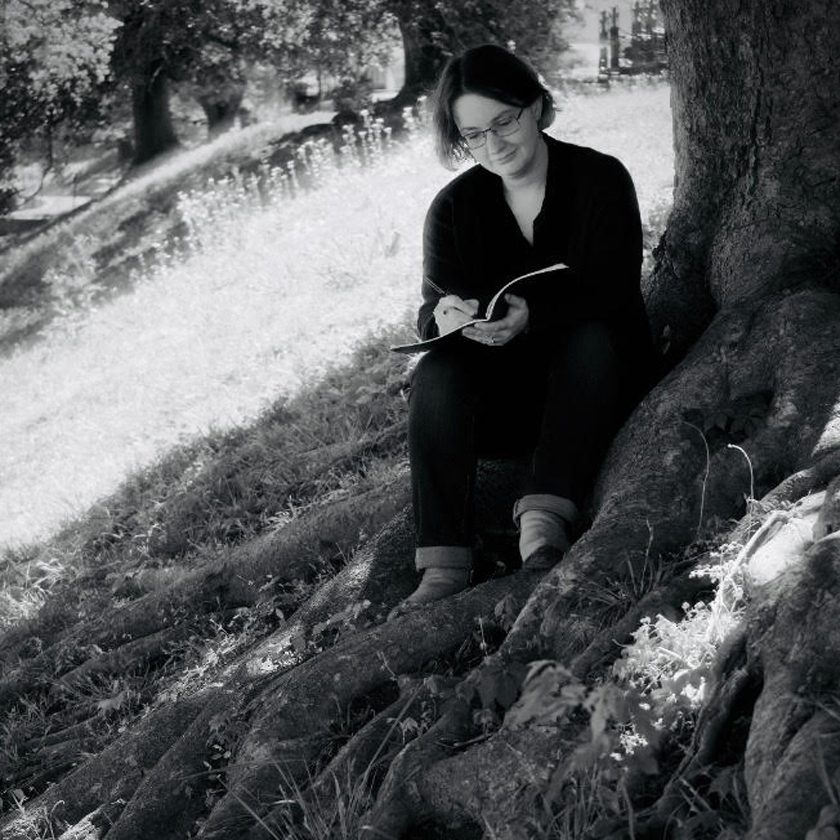
I always write new creative work by hand. There’s something about the tactile quality of the paper, pen, and the hand working it all that’s a major part of the process for me. I know there have been studies with brain scans showing an increase in neural activity with handwriting that doesn’t occur with typing, so that matters to me. Plus I get a creative satisfaction with the physical act of scribing in ink that doesn’t come through for me at the keyboard. I know not everyone is like that, though.
Is the “coming home” an idea that you repeat in many of your works?
Yes. I think about this all the time. For a variety of existential, geographical, and other reasons I tend to feel dislocated.
QUESTIONS ABOUT “AFTER”
Again, I see the use or at least the reference to using your imagination. Correct?
What if we are all paper dolls (men and women)? What would the world be like? Another underlying reference to John Lennon and Imagine???
The paper dolls line is taken directly from a poem by Philip Memmer in his amazing collection Lucifer: A Hagiography. Memmer’s version of Lucifer is reflecting on the nature of mortality in the human bodies he comes to witness. In my mind, that idea of bodies in connection with paper made me think of Sophie Scholl. So I wanted to write about her.
When was this written?
This was written a couple of years ago when I was reading Memmer’s collection with one of my classes.
Now, go back to the beginning and read her poems again.
Robert Bussey is a local attorney and poet who has resided in CenLa since 1986. He interviews other poets and then writes these articles to help promote poetry. You can reach him at Rlbussey450@icloud.com if you are a poet and would like to be interviewed.