by Michael D. Wynne
Historical treasures that are well worth preserving abound and surround us in CenLa every day; but sometimes we just “can’t see the forest because of the trees.”
In this case, it is literally true that the trees hide this unique treasure. In our very midst here in central Louisiana, is a one-of-a-kind early pioneers’ log cabin, long forgotten about and very much hidden away by nature’s overgrowth. Built only about 35 years after Kent House was built, itself the oldest building in north Louisiana, this valiant survivor truly represents the early migration of Americans coming from Europe and the east coast to settle the then-pure, unadulterated wilderness of early America.
This dwelling, that was already old when the Civil War took place, must have been how many of our ancestors had first lived in CenLa.
First things first – I cannot share the exact location of this edifice at this time due to complicated matters, but it is somewhere near Tioga.
This cabin, hand-hewn out of the native trees of the virgin forest, was the first non-native human habitation in this area, according to the state land records. There were no 18th century settlements in this area of the parish at this juncture of time although there were several Spanish land grants originally given of this area. According to several sources, including comprehensive DOTD research, in the early 1830s, parcels of land were sold in increments of 40 acres each. John Aton (died 1860s), who appears in the 1830 Census of Rapides Parish, appears to have first taken ownership of the property and likely built this “dog trot” style cabin out of the surrounding woods.
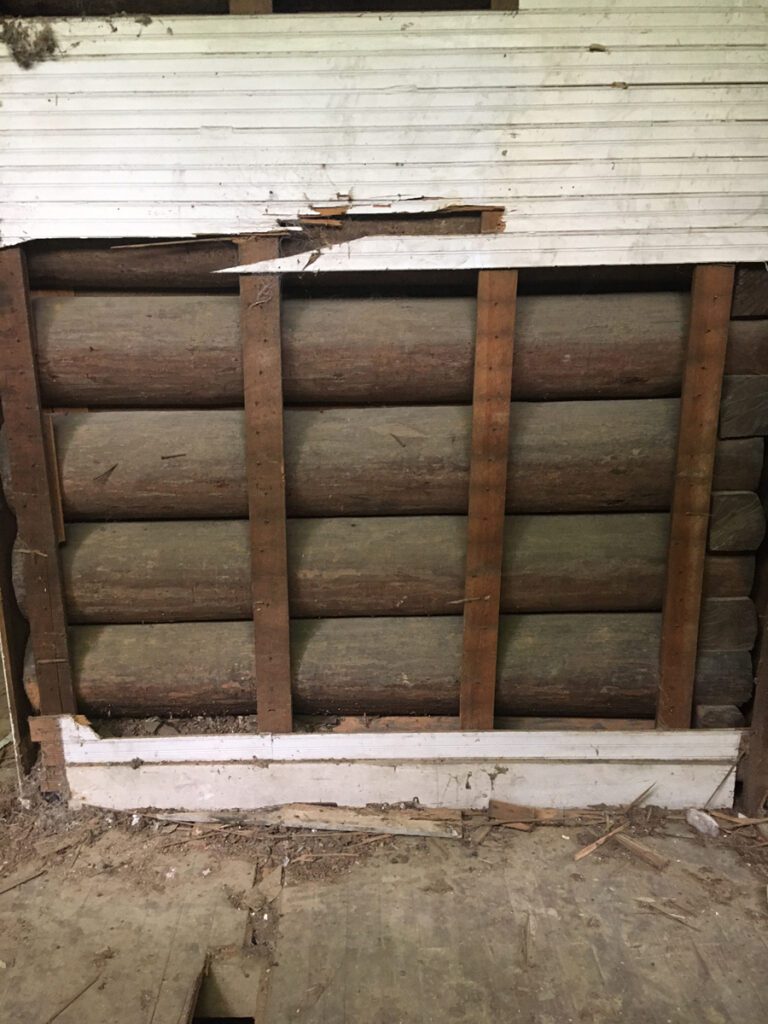
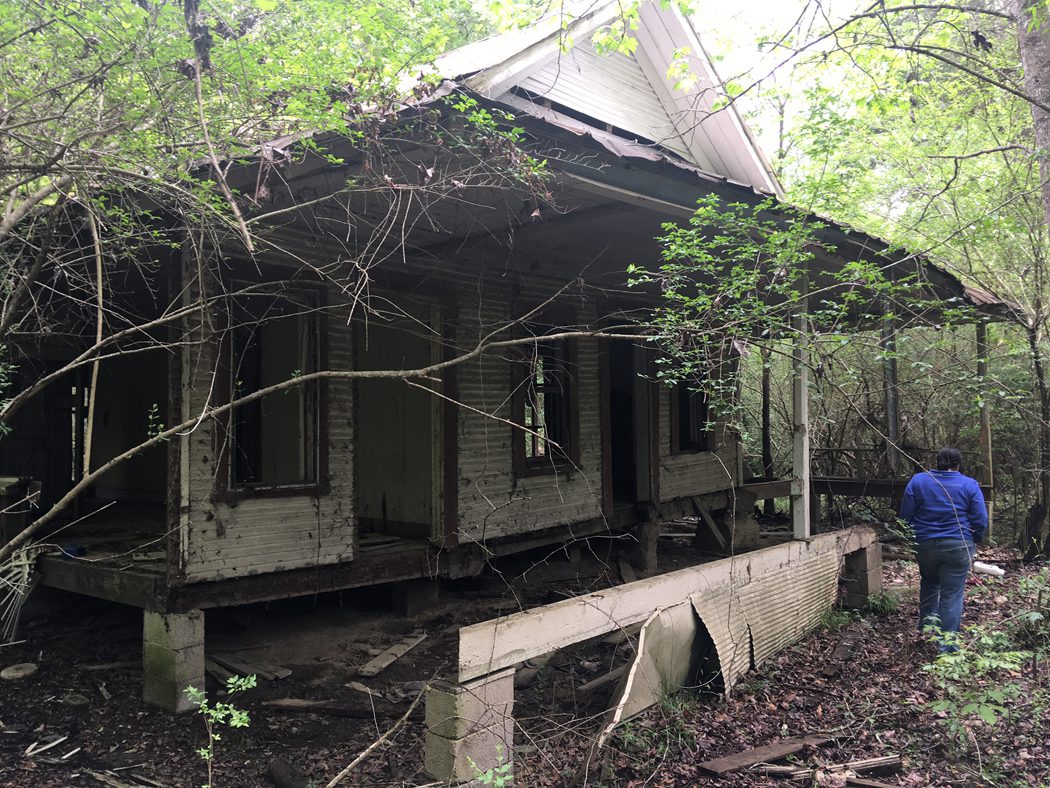
A “dog trot” style house is a popular Southern style of architecture in which a central, open-ended passage or breezeway connects 2 living spaces under a common roof, often used as a method of ventilation and cooling. In this cabin, sadly, one-side of the dogtrot has burned leaving one large original room. This remaining large, log room has now been encased in a more “modern” 1890s structure in which the left, back and right sides have add-on rooms and, currently, positioned as the front of the house, a large front porch has been built. This, along with a protective roof, has protected the ancient wooden
beams from both the weather and wood insects.
Shortly after the Civil War, William LaCroix (1839-1911) took over the cabin. He was an important man in his time who left a lasting family and community legacy. He served in several positions in local government including building bridges (1869), road commissioner (1878) and Police Jury candidate (1878). Unusually, he raised sugar cane there which was described in 1890 being of “fine” quality.
He died in his house as was described in his obituary (1911) as follows: “The deceased died suddenly while sitting in
his armchair before the fire.” His wife, Elizabeth, and later son, Michael Edward “Ed” LaCroix (1889-1950), who later inherited the house, also both died in the cabin/house.
The cabin/house and property is currently owned by Ed’s granddaughter. The cabin/house was last lived in sometime in the 1990s. Since that time, with no upkeep, bad weather and vandals, it has suffered significantly. But the log cabin portion
of the house, walls protected by clapboard on one side and plaster on the other, is actually in excellent shape, considering its age. The long and very thick timbers making up the ground support, walls and part of the ceiling are amazing in their intricate “Lincoln Log” style cuts and connectivity.
The cabin/house is under threat now by its most dangerous enemy- Man. Thieves have begun dismantling the 1890s portion of the house, heading towards the irreplaceable log cabin now. So who will now not just talk about saving it, but will step forward and actually do something and become the true preservation hero of Louisiana?