By Robert "Bob" Bussey
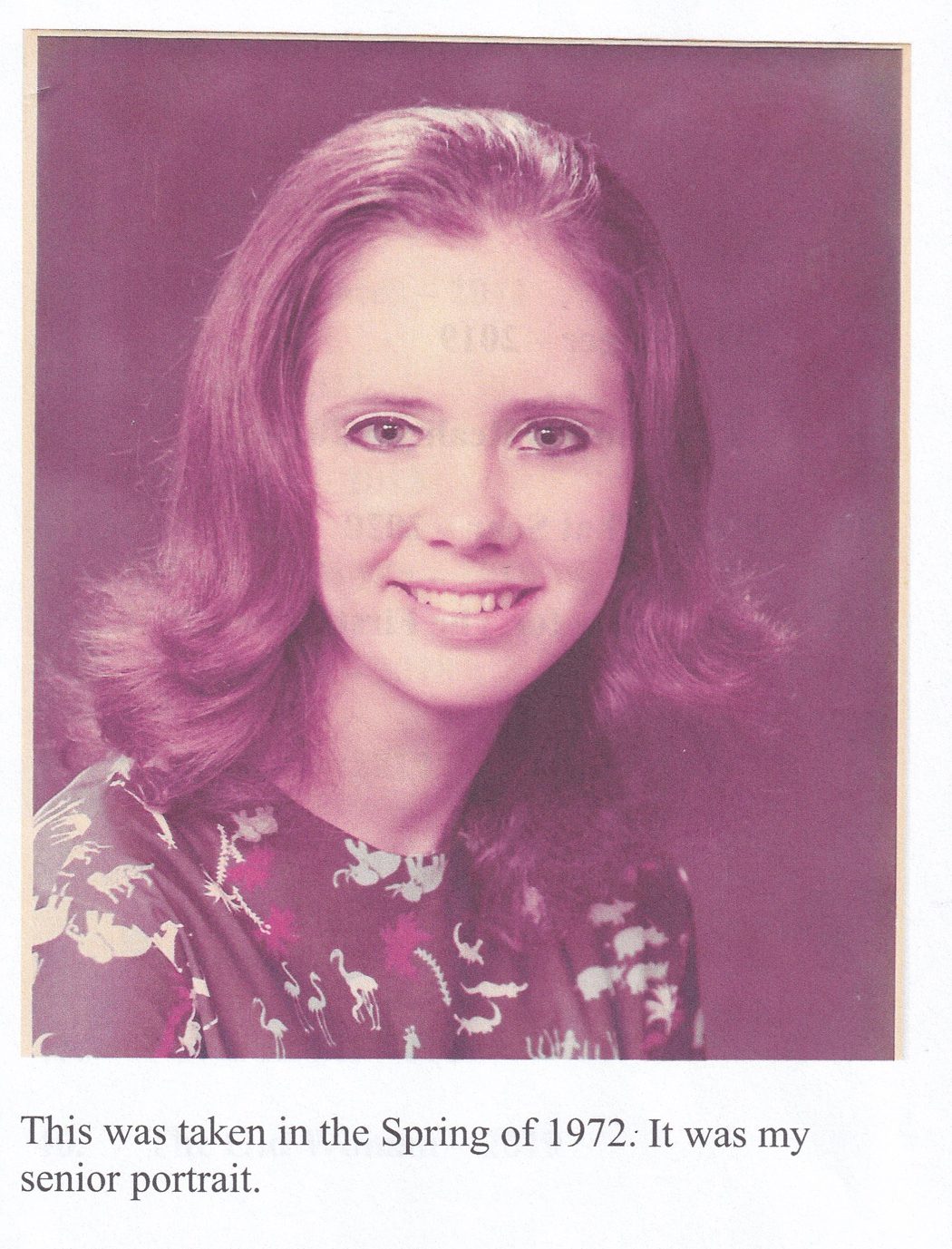
Sallie Hollis is a published poet but has never been to a poetry reading. She reads her poems to herself to see if they are any good and told her English students to do the same. (Are we dealing with a present-day Emily Dickinson?) It’s hard to believe that she has never been at a poetry reading at Tamp & Grind.
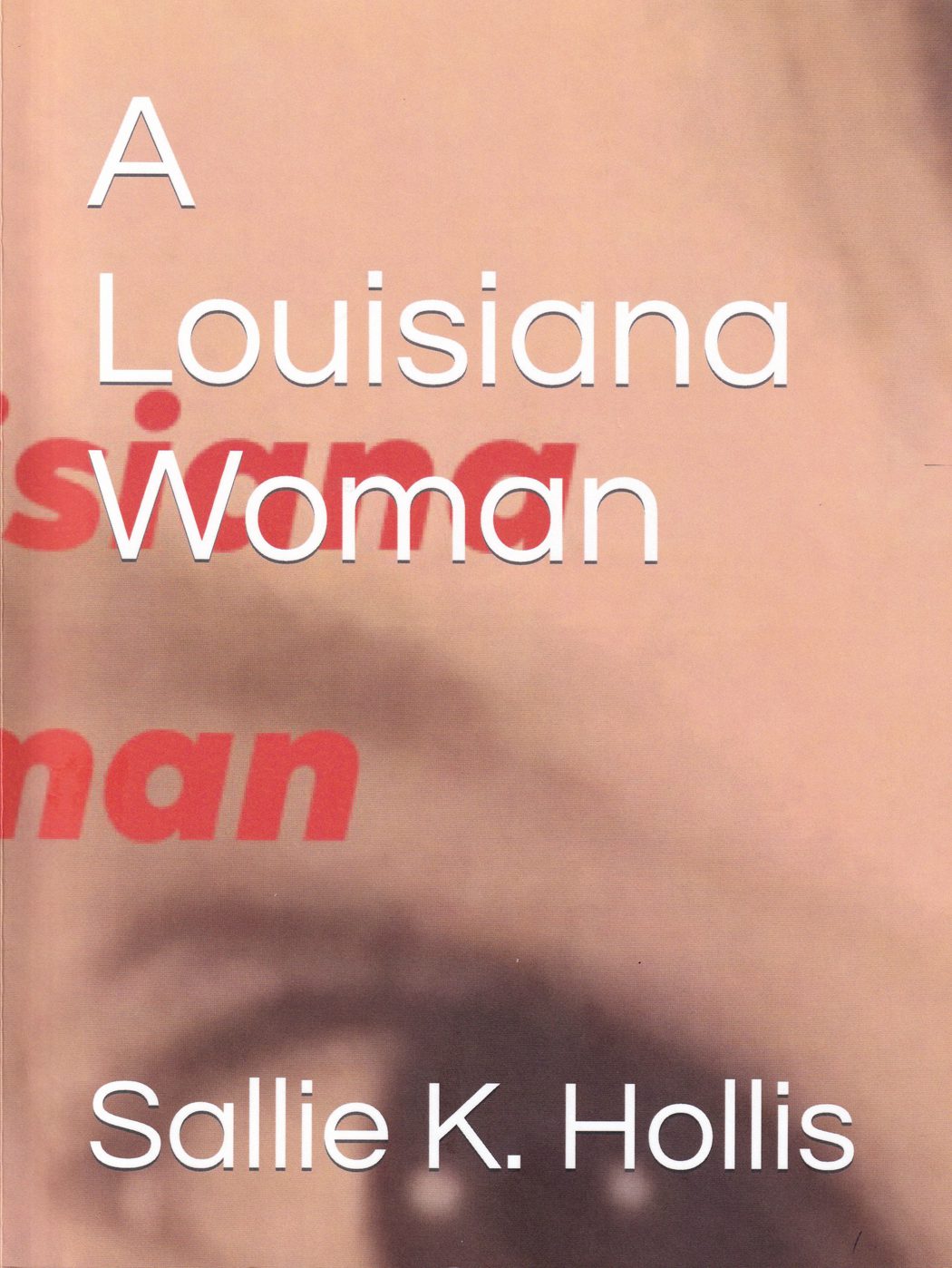
Her first book of poems, A LOUISIANA WOMAN, was published in 2020. The book, according to Sallie, tries “to capture the heart and soul of a Louisiana Woman in verse. From the first poem to the last, this book captures the mood and spirit of A Louisiana Woman.
Some may say that it is slightly morose, but being a Louisiana Woman is a very hard life. I have worked all my life to do something about this situation, because being a Louisiana Woman should not have to be so hard.” You can find her book on Amazon by clicking on the following link: Amazon.com: A Louisiana Woman eBook : Hollis, Sallie K. : Kindle Store The book is dedicated to her mom, Norma Stratton Hollis.
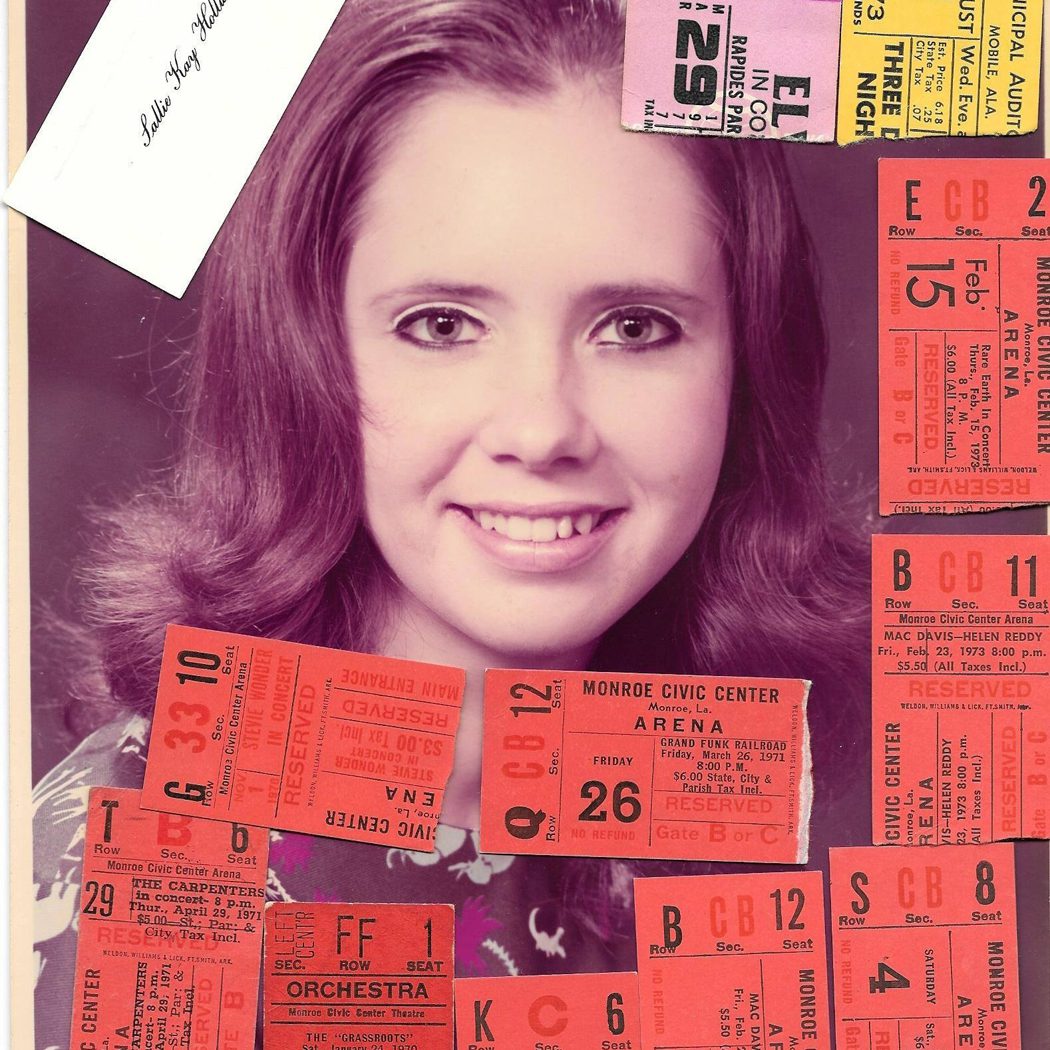
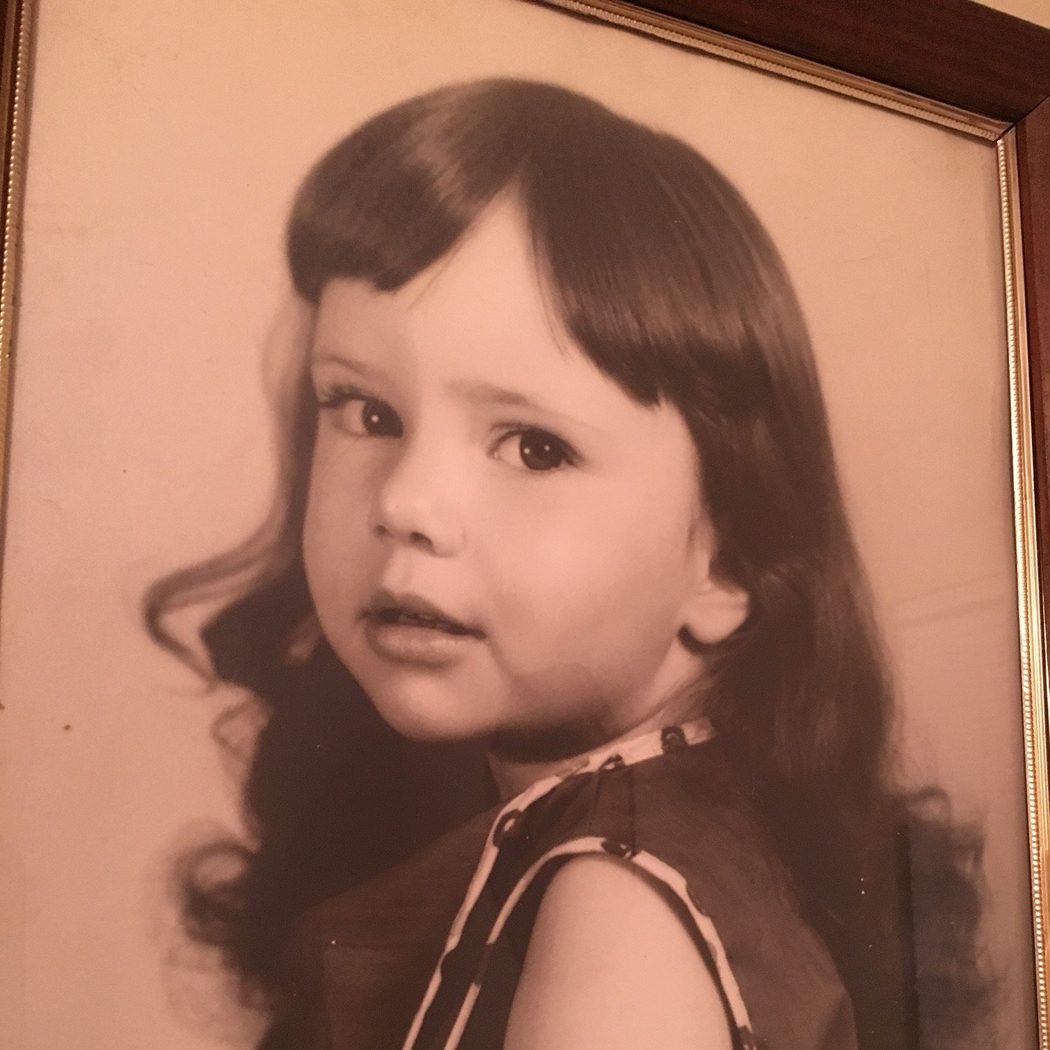
Sallie was born in Monroe, Louisiana at St. Francis Hospital on September 19,1955 the youngest of five children to Norma Stratton Hollis and Quinten Theodore Hollis. Her father died of skin cancer on July 19,1960 and her mother was left with four children.
They were poor when her father was alive, but they were really poor when he died. To her mother’s credit, she worked as a CNA before her husband got really sick, and her mom supported the family while he was sick.
They lived off her father’s social security benefits, VA benefits, and what her mother could make as a CNA. Her mom usually worked all night and slept while the kids were at school. Sallie’s older siblings had to baby sit her during the summers and at night. Sallie remember one of her sisters taking her on a date with her and her boyfriend. (That must have been so much fun for her older sister.)
Sallie’s book, “A Louisiana Woman,” is dedicated to her mother. She was a character and a true Louisiana Woman. She was Sallie’s only parent. Her mom passed away in 2008. Her mom was Sallie’s history; her rock; and her home. She was always there when times were tough.
Sallie married at 18 and eventually went back to the college where she graduated from Northwestern State University in Natchitoches, LA, with a degree in secondary education. She majored in social studies with a minor in English.
After seventeen years of marriage, she divorced her husband and has been quite happily ever since.
After her divorce, she started working two teaching jobs. She taught school at night for those a few credits away from graduating. During that time period, she discovered that she has a creative person. When I was young, I thought I was crazy, but she found out that being a creative is often on the cutting edge.
Poe said from the first word to the last word in a poem the reader should be able to feel your tone. Sallie thinks from the first word to the last to set a tone. She says “It’s a very hard life being a Louisiana Woman and I hope to make it a littl easier for all those women out there. Please read my little book and let me know what you think.”
Sallie says that a poem is supposed to convey a certain emotion. Hers can be a play on words to convey that emotion or some idea. She likes structured poems, ones that have a rhyming pattern. She says that “Rhyming is a challenge.”
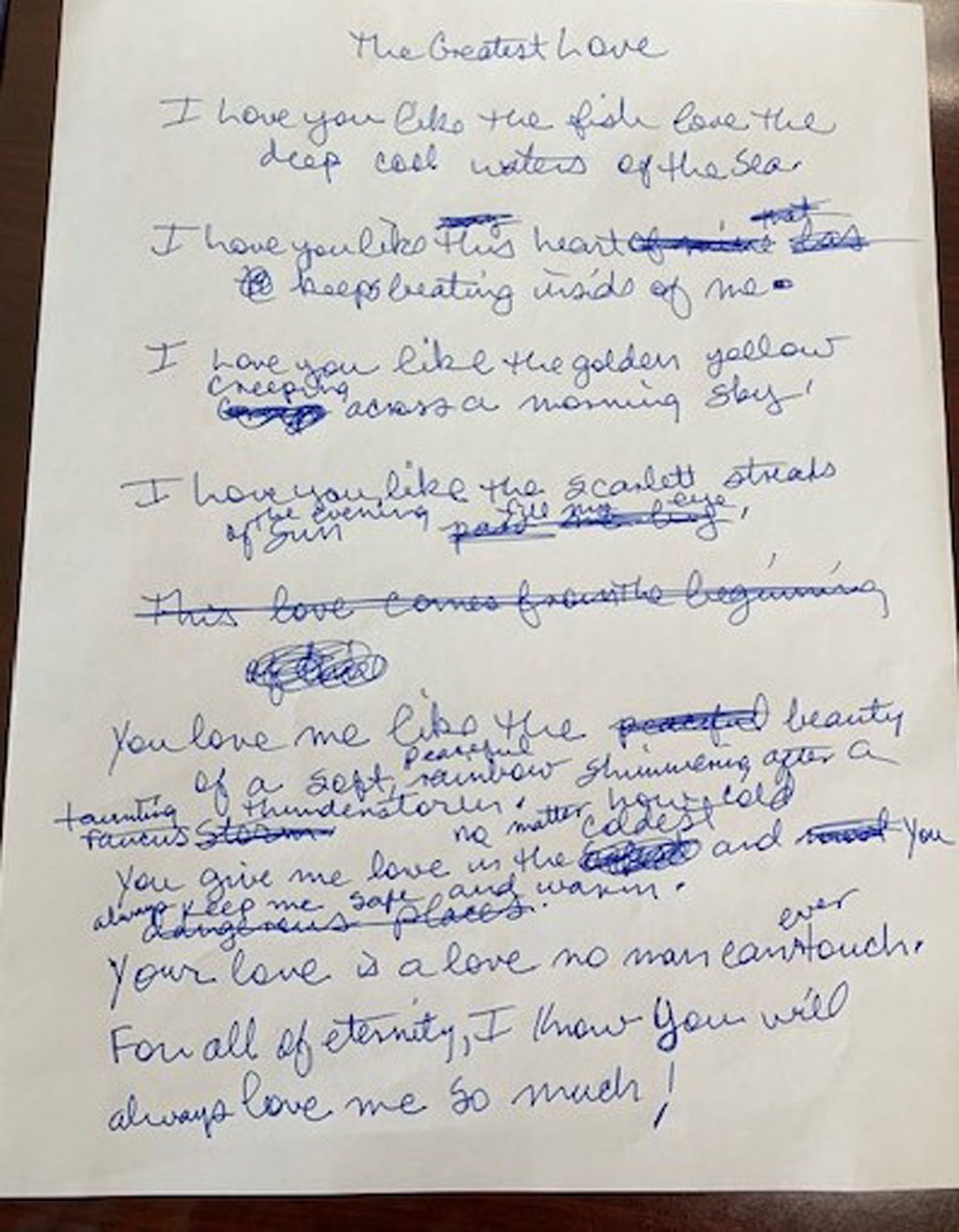
Free verse is too easy. She handwrites her poems to begin with, edits them, reads them out loud to herself and finally comes up with the typed version. One of her handwritten poems with edits is presented in this article so you can see part of the process.
When she was a teacher at Bolton High School, teaching a night school B class, she would show her students different styles of poetry. While not all of her poetry fits neatly into a poetic style she does, on a regular basis, have some sort of rhyming pattern. Some might be pretty direct rhymes, others might be near rhymes.
So whether it is in a sonnet style (or almost), a quatrain style (or almost), or sestet style (or almost) you will find Sallie setting down, and perhaps struggling with, a rhyming pattern.
Before we look at a few of her poems from her book, let’s peek at a few that are relatively new and not in the book.
THE GREATEST LOVE (written in 2025)
I love you like the fish love the deep cool waters of the sea.
I love you like this heat keeps beating inside of me.
I love you like the golden yellow creeping across the morning sky.
I love you like the scarlet streaks of the evening Sun fill my eye.
You love me like the beauty of a soft, peaceful rainbow shimmering after a taunting thunderstorm.
You give me love no matter how cold and you always keep me safe and warm.
Your love is a love no man can ever touch.
For all eternity, I know you will always love me so very, very much.
Written in August, 2025.
This was a quatrain poem. Four lines to a stanza with an AABB rhyme scheme in each stanza. There is no magical syllable count. There is the use of the same word at the beginning of each line in the first stanza and in three of the lines in the second stanza. This is commonly called anaphora, which has a long, long history of use in poetry and in the Bible. Sallie is in good company by using this technique. The term anaphora refers to a poetic technique in which successive phrases or lines begin with the same words, often resembling a litany. The repetition can be as simple as a single word or as long as an entire phrase.
The term “anaphora” comes from the Greek for “a carrying up or back,” and, as one of the oldest-known literary devices, anaphora is used in much of the art world’s religious and devotional poetry, including numerous biblical hymns in the Book of Psalms
Elizabethan and Romantic poets were masters of anaphora (Sallie’s favorite poets are amongst the Romantics), as evident in the writings of William Shakespeare, Sir Philip Sidney, and Edmund Spenser. Shakespeare frequently used anaphora in both his plays and poems. For example, in Sonnet No. 66, he begins ten lines with the word “and”:
“Tired with all these, for restful death I cry,
As to behold desert a beggar born,
And needy nothing trimm’d in jollity,
And purest faith unhappily forsworn,
And gilded honour shamefully misplac’d,
And maiden virtue rudely strumpeted,
And right perfection wrongfully disgrac’d,
And strength by limping sway disabled
And art made tongue-tied by authority,
And folly—doctor-like—controlling skill,
And simple truth miscall’d simplicity,
And captive good attending captain ill:
Tir’d with all these, from these would I be gone,
Save that, to die, I leave my love alone.”
Not only can anaphora create a driving rhythm by the recurrence of the same sound, it can also intensify the emotion of the poem. Sallie is in good company with the use of this technique, and it definitely adds to the impact of her poem, which by the way, if you haven’t figured it out yet, is about God.
SPRING (written in 2025)
To feel the warm, joyful sun of an early Spring Day.
Makes the gray, cold clouds of Winter wash away.
I sit in my kitchen with the curtains thrown back.
Knowing the bright Spring Day could never allow my doubts and fears to attack.
Looking out my window at the goodness of the yellowish-pink day.
Causes my hope to bloom through March, April, and there’s always May.
This poem also has a traditional form and includes a rhyming scheme. I also sense a beat or rhythm to the poem. Read it out loud and see if you also find a built-in rhythm that adds to the impact of the poem. By the way, this follows the form of a sestet. There is nothing hidden in the poem, no mysterious metaphors (although some might find one or two in “gray clouds” or “joyful sun” which could be about new beginnings from bad experiences. The rhyme scheme is AABBAA.
A sestet is six lines of poetry forming a stanza or complete poem. A sestet is also the name given to the second division of an Italian sonnet (as opposed to an English or Spenserian Sonnet), which must consist of an octave, of eight lines, succeeded by a sestet, of six lines. (Spring does not pretend to be a sonnet.) The etymology of the word “sestet” can be traced to the Italian word sestetto, meaning
“sixth”.
MY STAR (written in 2023)
Looking up at the sparkling diamonds strewn across a black velvety night sky.
Makes me feel for the moment that life has no plans to ever die.
That same freeing wonder as I look up at the glittering night sky.
Makes me feel that the biggest and the brightest one could never be too high.
As the nights pass and I wonder if there could even be another tomorrow.
The diamonds in the night sky twinkle along with every unattainable hope and heartfelt sorrow.
With every clear starry night, I was suddenly made to see:
That I was not looking up at you, but you were looking down at me.
Your peaceful wonder glistening in the night.
Takes away the bitterness and an old lady’s fright.
Your freeing majesty of precious perfection fills my lonely soul.
Looking up at your bright shining light makes this once fractured female feel whole.
And now I can look up at my precious shining star;
And always know exactly where you are.
I suppose some might note that this poem has 14 lines. Ah, a Shakespearean sonnet! Nope. Not the correct syllable count in the lines. But close. However it does continue to have a rhyming scheme. I’ll let you figure it out this time.
Now, let’s shift gears and look at some of the poems that Sallie published in “A Louisiana Woman.” I’m not going to dissect these poems. I’m leaving that up to each reader. But, if you don’t find a rhyme scheme (perhaps not perfrect) then throw me off the nearest cliff, but into a soft bed of feathers, please.
Dancing Alone (1996)
Some say they hear voices,
Others “A Funeral in Their Brain”;
People with gifts for dealing with pain;
Searching for years to describe this thing;
The only enlightenment I can bring;
For me it’s like dancing alone,
Like dancing alone!
Time drifts by once too often and you’re alone;
The old records call you home.
Guitars screaming, drums beating,
The bass pounding with your heart;
You can dance a hedonistic dance;
Putting yourself in an imaginary trance.
Across the dance floor you swirl;
Always the prettiest girl;
Always young fresh out of school;
Other girls glare with jealousy,
While the boys dream of making you their fool.
Every muscle in your body moving to the beat;
The ultimate freedom, like an addiction,
You have to repeat
Your favorite love song plays,
And you hold out your hands,
While your body sways.
He comes, this wonderful man,
And slowly slips his hand in yours.
Faceless, except for beautiful, uncritical eyes;
To him you’re every dreamer’s prize.
Fire strikes your back where he places his hand,
Every sense is filled;
The smell; the touch; the feel; of a beautiful man;
Your skin catches fire as he pulls you close.
The song plays on of loves found and lost.
Losing yourself in the sweet warmth of his body;
But the music stops and the man disappears.
You’re left standing like an octopus twisted.
It’s the saddest most pathetic thing to see;
A fool dancing alone,
And it is the only way to describe,
This thing in me.
Sallie told me that she wrote Dancing Alone once she had come to some personal realizations. I think we can all relate. Most of us have to go through a period or multiple periods of self-reflection, self-doubt, self-questioning whether that is in out teens, early twenties or much later. Often these times are brought to the forefront during times of stress brought into our lives via different forms. But, finally many come to the realization that while we oft need others we also need to learn how to stand on our own feet, how to create our own dance, our own song, our own lives. In this poem the young man could easily be a metaphor for any person you let close to you who then drifts out of your life suddenly or slowly. Read it again. Think of your own life. Do you see yourself?
This last poem is kind of long so I am going to set it out without any explanation. (My editor might jump down my throat… figuratively and actually. LOL … if I put too many more words into this article. So here ya geaux:
Dried Flowers Can Bloom (1997)
Like the once lovely, lifeless flowers carefully positioned at the top of the shelf:
ls the way the world views a middle-aged woman like herself.
Maybe once she was a bright yellow, pink, or blue,
With voluptuous petals shining from the early morning dew;
Now picked and sucked of her cellulose by a husbandman who left without a clue;
Left her a brittle, fragile shell that no man could break.
Waiting for grandchildren is the only decent path left for her to take. Living life like a series of math problems that need only to be solved;
Anything too complicated and she’d never get involved.
Rendering to Caesar, a yearly mundane task;
Sitting with this man, thinking of questions about deductions she needs to ask.
Suddenly she can’t stop staring at him no matter what she tries.
Noticing his soft illuminating dark eyes,
With long satin black lashes, as lovely as a woman’s;
And his statuesque nose chiseled from stone like the Romans.
Watching his lascivious lips, longing to press them against hers;
Shocked at the juices within her he stirs.
Jumping as this mature Adonis speaks her name;
She hopes for sweet lurid words of mad passion;
But instead, he inquires of the dependents to claim.
Pulling her chair slightly closer to his perfectly slender frame,
Noticing no ring on his delicate strong hand,
But a child’s picture carefully placed on a silver stand;
His sorrowful eyes tell of someone who has gone before.
Saddened at realizing how he must have suffered through silent pain;
How else could a man be so strong, compassionate, and sweet.
She longed to throw her arms around him and say,
Please lay your burdens down at my feet.
But the time moved in fast forward motion.
Nothing else could be spoken; no words to slow the time.
Nothing but her imploring sad words heard only in her mind.
Would you join me for some coffee?
Why not step around the corner and we could dine?
Only the goodbyes fluttered through the air on the wings of self-doubt and despair.
But for a second, she turned to speak as the voices in her head battled to come out:
And for that second this Adonis returned her look as men sometimes do.
The second slipped away as fast as the switch of a light:
And the lady departed lamenting over her crippling illness.
A sickness inflicted upon her since birth, so deep, so painful; Impossible to phantom the aching pain from this malady; Born
from the repetitive noxious sound of the word, no.
Yes, the great infinitely cruel Deity was a man.
It would be a merciful place if the surgeons would just rip it all out,
Than to suffer with this impossible longing over something you’ll never have. Later in the night preparing for her routine of repose;
Staring for a moment at her one connection to the world outside her prison walls; Praying to hear its many ring and thinking of the words she needs to compose.
Surely, he would call and they would talk as if friends for life.
They would become an inseparable pair and he would make her his wife. Shocked at the foray into silly teenage-girlish dreams;
She passes a mirror and hears her own guttural screams.
The lines on her face and the speckles of gray in her hair,
Match the red puffy eyes encased in dark rings from crying an ocean of tears. The wasted grieving over the lost and tumultuous years;
Why should he settle for the bruised and rotten fruit.
When he can still pick the fresh ones right off the tree;
Feeling her brittle but fragile shell being crushed by reality;
Who needs them anyway, it was much better to be free.
They’re all innately monstrous once you let them in.
There is no argument, no game, they will let you win.
She could sleep in the middle, on the left, or on the right,
With no one to bother her during the night;
Repeating the saving lies until she was fast asleep.
Flushing like a school girl when she met him on the street; Thank God, no one could possibly know;
That she dreamt he called and sped her away;
And they dined, danced, until they needed a doss.
Poor man, how could he possibly know!
She kissed him last night in her sleep, from the top of his head to the bottoms of his beautiful feet.
Smiling his sweet smile promising to find more deductions next year;
This magnificent messenger departs oblivious to the great miracle he has performed here.
Like Sarah who at ninety-nine felt the fruit of her womb; This man will never know how he made dried flowers bloom.
Wow, is all I have to say.
I said it before, but it needs repeating , the book Sallie Hollis wrote, “A Louisiana Woman” can be found on Amazon. You need to buy it. You need to read it. Its packed with poetry. Poetry that has a punch. Amazon.com: A Louisiana Woman eBook : Hollis, Sallie K. : Kindle Store