Brought To You By 318Central.com
The front row. The worst seat in the house.
The dreaded funeral service front row.
Anyone who has lived this experience has been personally introduced to the society of the grieving … real-world, first-person, overwhelming grief. Those who have not (yet) must rely on the dictionary definition. The gap between the two is vast – not beyond compassion, but almost certainly beyond comprehension.
There are not just “seven stages” nor does time “heal.” And while everyone’s journey is in some way unique, there is one common denominator that members of the grief world share – the isolation of not hearing their loved one’s name after the service is over and the last food donations are finished.
For reasons better explained by trained counselors, even our closest friends and loved ones adopt a stance that if they “mention their name” it will make us sad. And please allow me to use the word “us,” because I am personally a member. I know firsthand; I have suffered loss. I have occupied the front row seat. And I am here to tell you, as is the subject of our story, Stader Richardson, that hearing their name is the most welcomed sound.
Someone once said people die twice, the last day of their lives and the last time their name is ever mentioned. A sobering thought, and one that drove Richardson, who lost his wife Frances in 2022, to deal with his own grief by letting the “non-member world” know how it should be done. His “little LLC,” is being hailed by the hierarchy of the grief community as having the potential for an astounding effect on everyone with whom it comes into contact.
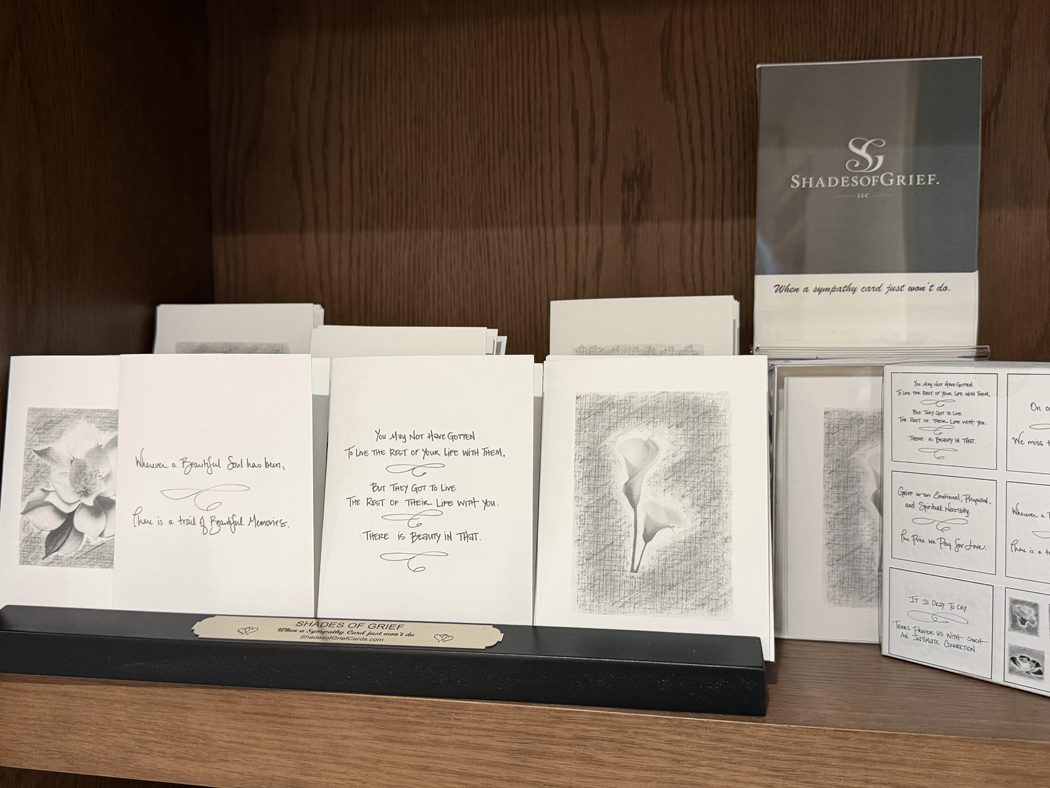
It’s called, Shades of Grief, and with it he has created a line of “greeting” cards, (could there be a better/worse double entendre?), that will touch people’s hearts and souls – not just those who receive but also those who send.
The cards are both beautiful and beautifully written, purposed to let those grieving friends and loved ones hear from friends and family long after the isolation begins. Heartfelt correspondence on a level far above that of the dreaded question, “How are you doing?” A chance to let them hear that name!
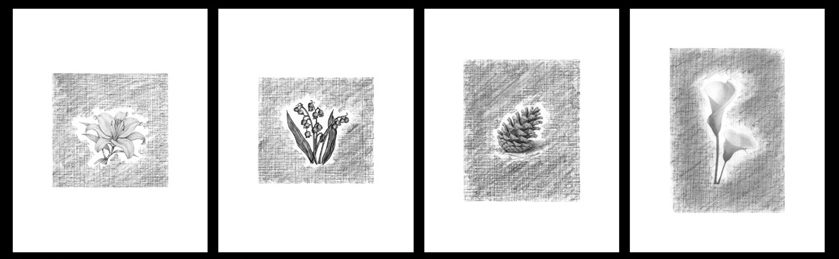
Let me give you a few examples. Wrapped inside keepsake quality fine linen, with cover art of pencil and ink floral designs, are sayings like:
“When it feels like everyone has moved on … Not everyone.”
“On our quiet days we miss them a little louder”
“You may not have gotten to spend the rest of your life with them … but they got to spend the rest of theirs with you. Please take that comfort”
“It’s okay to cry … Tears provide us with such an intimate connection.”
“This card is for an extra hard day … Please use it to call me.”
And a personal favorite of mine, “Let us keep them alive in our hearts … and on our lips.”
Richardson credits a single incident and subsequent contact with several influential members of the grief world for moving him forward with his project.
“I guess the real impetus came about a year after I lost Frances, when my college roommate, Doug, lost his battle with cancer. Frances and I and he and his wife Janie were close, and I really searched for a card to send her to let her know how sad I was. I searched the Sympathy Card aisles of stores, large and small, only to find soft pastel versions whose messages were something like, ‘May the rain pass and the clouds part …’ They reflected sadness perhaps, but certainly none with the ability to address such a life changing reality.
“So I ordered some blank white cards from Amazon, took a picture of a flower, printed and shaded it with a pencil and wrote her my feelings. And it surprised me. I knew immediately that it was going to be meaningful, and it made me feel good as well.
“I had some cards left over so I drafted a few more, and they came to the attention of a Franklin, TN author, Rebecca Cooper. Becky had lost her husband Charles over a decade before and was told at the time a daily journal might help her with her grief during the dreaded “First Year.” What she did instead was write her husband’s journal, DAILY conversations he was having with God about his wife’s suffering. It’s called Hey, God? Yes, Charles, and when I first read it years ago, it brought me to my knees. My Frances loved it so much she probably bought and sent over a dozen copies to grieving friends. I remember at the time thinking, “How many people must Becky have helped by sharing her own grieving process?”
“So I wrote some more …”
Fast forward a few months and a local episcopal church’s grief support group picked up a set of the first five cards. The priest who led the group informed Stader that the cards needed to “be out there,” they were “going to make a real difference!” The priest said, “Your Frances and God are up to something!”
And the rest, according to Richardson, was pretty much luck. Or perhaps it was the divine intervention the priest referenced. At any rate, the cards made their way around to some nationally recognized members of the grief community. Ultimately, it led to the events of this March 18th website release, (Frances and Stader’s anniversary, by the way. They chose their childhood area code so they wouldn’t forget when they got old).
So, readers, here’s the story of one man’s grief journey hopefully with a special path forward for those who are members of that club no one wants to join. You may check out his website at shadesofgriefcards.com.
And don’t forget, when you have the opportunity …
Always mention their name. Like Stader’s Frances,
Or my Hube!
Orkke Clifton, Editor