





By Michael Wynne
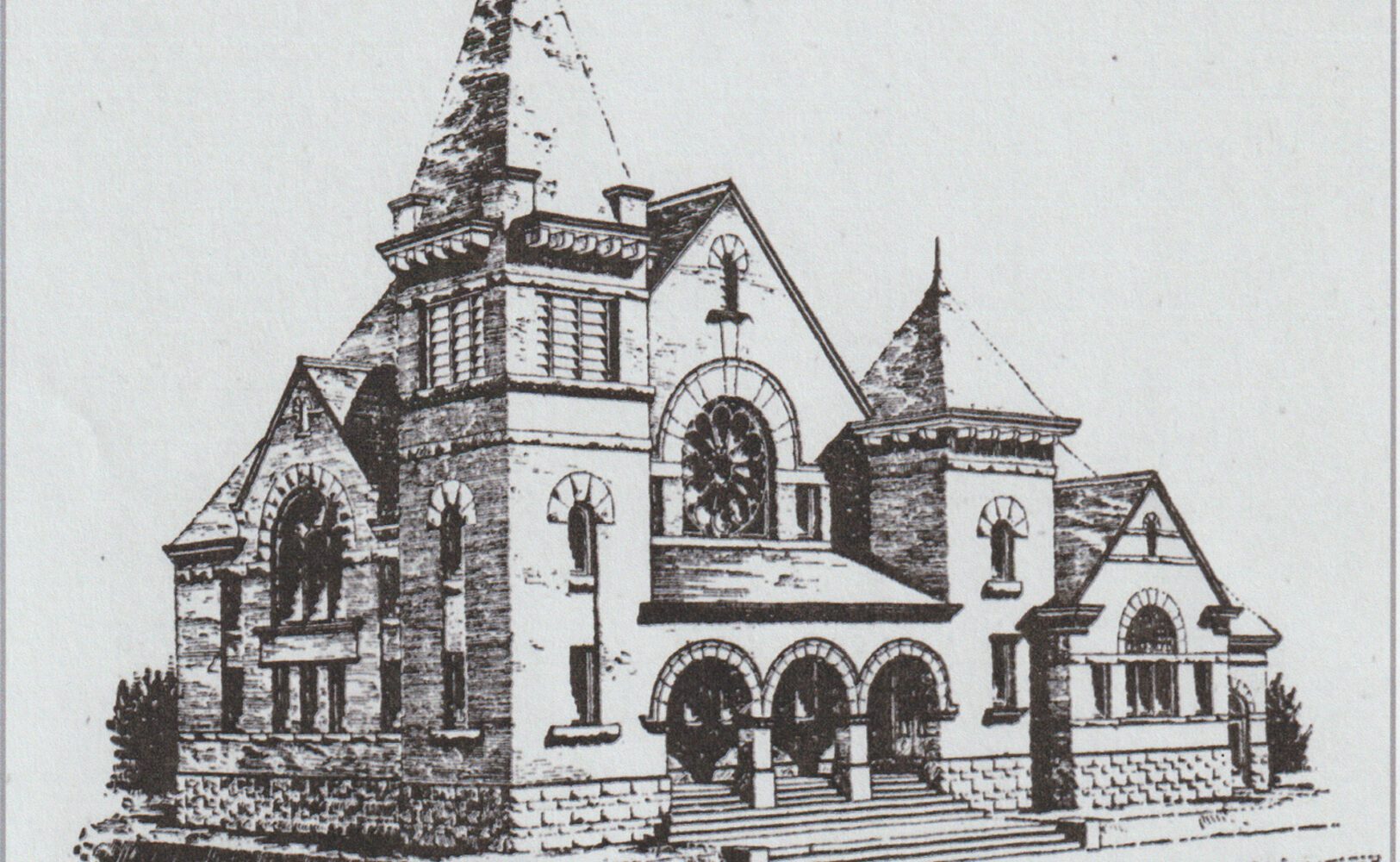
One of CenLa Louisiana’s greatest and most historic buildings is the “Greater New Hope Missionary Baptist Church,” originally named the First Methodist Church, located at 630 Jackson Street in Alexandria. But the Methodist Church’s origins go back almost 200 years in central Louisiana. Here is the story of this beloved treasure.
According to this columnist’s research, Methodism first came to Alexandria and central Louisiana in 1833 with the advent of a circuit-riding Methodist minister. The “Rapides Circuit” consisted of the parishes in central/north Louisiana, with the earliest documented minister riding this circuit being John Q. Jones. As for a church building, there is significant evidence that as much as three small Methodist church chapels existed before that time, all on Third Street, between Washington and Lee Streets.
In the early to mid 1840s, a larger Methodist Episcopal church was established at the corner of Jackson and 7th Streets, now the site of its successor, the Greater New Hope Missionary Baptist Church. So, a church building has physically existed at that spot now for at least 180 years!
The current church building, then named the 1st Methodist Church, had its cornerstone laid on Sunday, October 20, 1907, in a day-long, grand ceremony. Starting with services and speeches at Alexandria High School auditorium that was located on 7th (now Foisy) Street at 9:30 a. m., the cornerstone was laid later in an elaborate ceremony at 4 p. m. Inside the cornerstone of the church, and still waiting to be seen again after 118 years by the human eye, is a large, secret box with various church treasures: a Bible, hymn book, “Discipline of the Methodist Church,” copies of two out-of-town newspapers, minutes of the Louisiana conference, a copy of the October 19, 1907 Town Talk newspaper, a list of the members of the church, portraits of the former Methodist church pastors, and many other important documents. The laying of the cornerstone was followed by another service and more speeches back at Alexandria High School. (Hopefully, we can one day soon resurrect this box of memorabilia before the materials fully disintegrate.)
In a rare document found by this writer, the church was described back in 1907: The dimensions are 80 feet by 108 feet, one of the largest of its kind in Louisiana as of 1907. The main auditorium is bowl-floored, unusual for its time, and is decorated with opalescent art glass. The original heating system was advanced for its time, a mechanical system of hot air forced in by electric fans. The building itself was built of high-quality St. Louis pressed brick, gray in color, put up in black mortar. The foundation is concrete, but topped with 6 feet of buff Bedford stone, The roof is a red tile roof of the highest
quality and which remains protected today. The building cost $24,200 and furnishings cost about $31,000. The building committee consisted of Horace White, Thomas Holloman, William Roberts, Ed Rand, James Nugent and Rev. Hampton Singleton.
This writer remembers well when legendary 7th District Congressman Gillis Long (1923-1985) passed away. He was mentioned in President Ronald Reagan’s 2nd Inaugural speech as having passed away the day before. Long’s funeral was conducted at this church building with the U. S. Speaker of the House of Representatives, Thomas “Tip” O’Neil (“all politics is local”) attending. Reverend Vincent A. Parker currently has the honor of leading this church.
It is a shame that one of the finest Romanesque-style church buildings in the state, if not the South, has yet to be recognized with a deserved historical marker to honor its long and important history in central Louisiana.






