By Michael D. Wynne
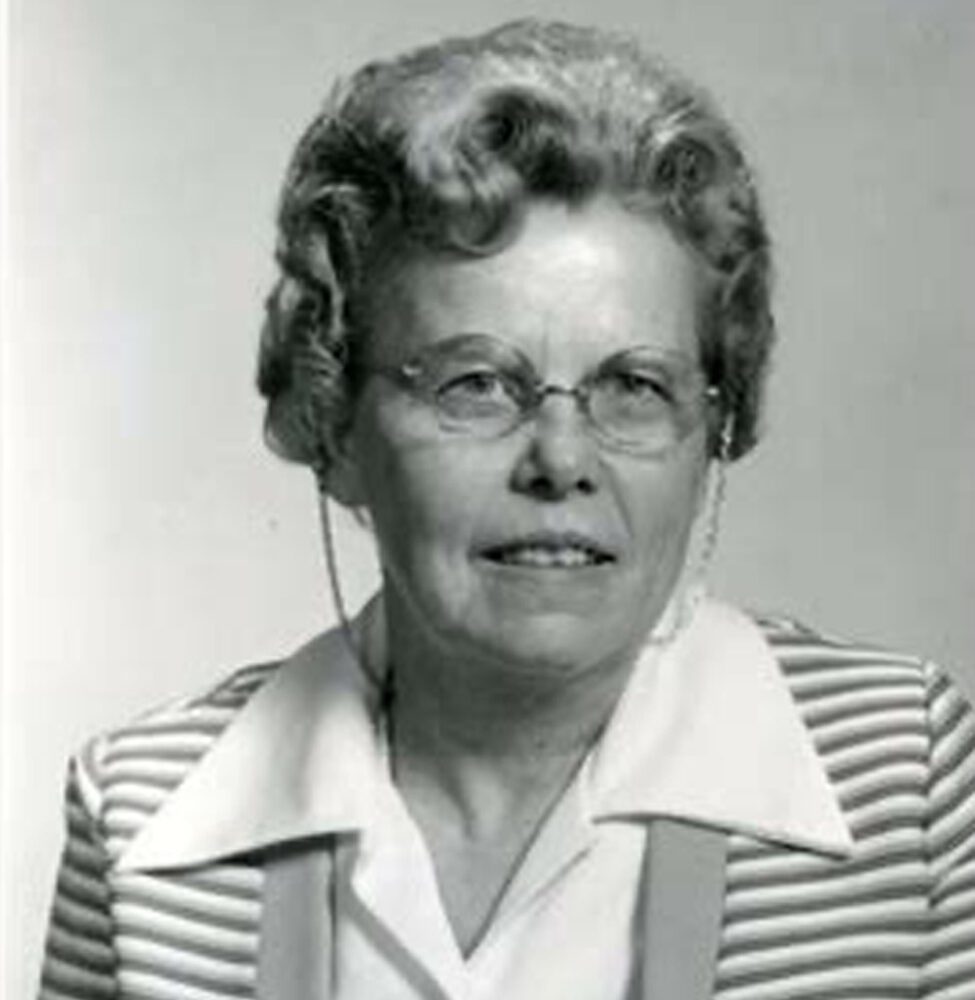
This columnist misses Sue Eakin very much still. Over three decades, I spent a great deal of time with her, visiting her at her home in Bunkie, traveling with her on some occasions, and working with her on various CenLa history and preservation projects.
Most of all, I miss her wit, knowledge, dedication, inquisitiveness, and her guidance on what is truly important about our local history and our area. A book really needs to be written on this remarkable woman’s life.
Although most people associate Sue with the Solomon Northrup story, there is so much more about her life that deserves our attention. Myrtle Sue Lyles Eakin was born on Compromise Plantation near Cheneyville, the eldest of nine children. After graduating in history at LSU, Sue, the mother of five children, held many jobs including writing for the Bunkie Record (a newspaper), working as an archivist for the Louisiana State Archives, and later serving as a professor of history at LSUA. But her life was all about researching and writing about history. Her first book, a slim, now very rare, volume on the history of Cheneyville printed in 1950, preceded numerous admired history books, the most important of which was a popular history of Rapides Parish and a high school textbook history of our state.
She developed a Southern history institute on plantation life, and along with her students, conducted over 400 oral history interviews. These and other activities alone would have immortalized Sue to the people of Louisiana.
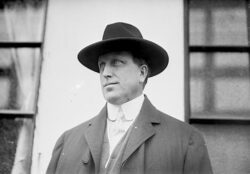
Regarding the frequent focus of her life’s work, Sue often told the story of how she became interested in the Solomon Northrup tale when she was twelve. One summer day in 1931, Sue’s father, a local planter, drove her in a flatbed truck to the nearby town of Bunkie, not far from the property and home once owned by planter Edwin Epps. Sue and her father went to visit Oak Hall Plantation, where her father had business with the owner, Sam Haas. Haas brought young Sue to his library on the second floor to pass the time. There, Haas handed Sue a copy of the book, “Twelve Years A Slave.”
“I began reading the old book as rapidly as I could, becoming more and more excited with every page,” Sue wrote later.
“I recognized local place names like Cheneyville where our mail was delivered.” She also recognized many local family names.
She was amazed that this tragedy occurred in her own neighborhood, but no one locally then seemed to know anything about this incident. She didn’t see another copy of the book until she attended LSU in 1936, buying a copy for 25 cents from the legendary book seller Otto Claitor. Sue devoted the rest of her life to proving Claitor wrong when he said to her back then that the book was “pure fiction.”
After decades of research, Sue wrote her Master’s thesis on “;Twelve Years A Slave,” and in 1968, republished a footnoted edition of the book. After obtaining her PhD in history from USL (now ULL) in 1978, Sue developed the important Northrup Trail, a tour of key locations from the book, a tour that visitors from around the world still use today.
Her life’s work culminated, though sadly after her death, as she was credited by Steve McQueen, the director of the Oscar winning movie version of “Twelve Years A Slave,” during the 2014 televised Oscar broadcast. McQueen said “this amazing historian, Sue Eakin, who gave her life’s work to preserving Solomon’s book.” What Dr. Sue Eakin did for Solomon Northrup’s story is remind all of us of our important heritage that exists all around us today that we are all responsible to preserve.